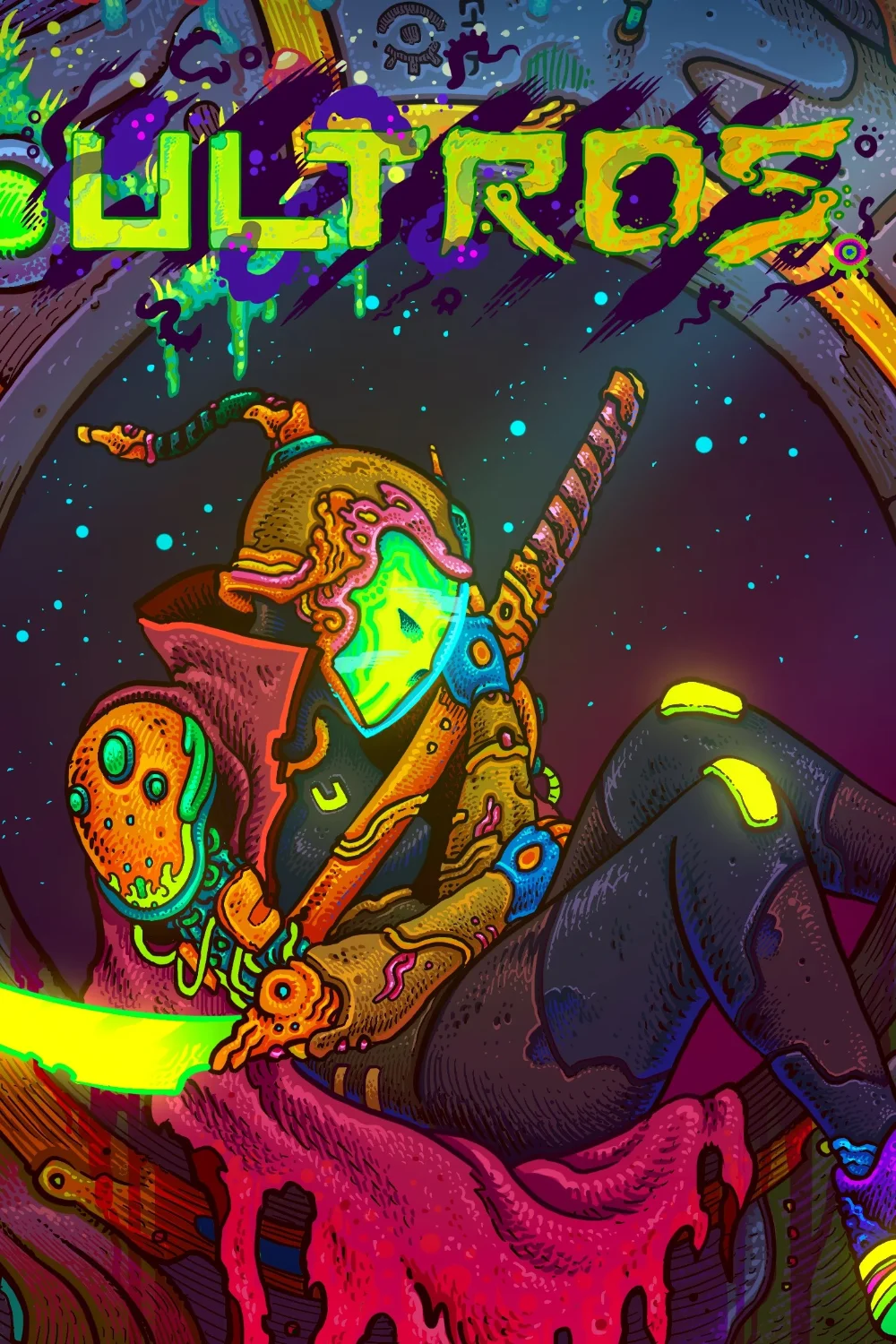
Ultros immediately drew me in with its gorgeous neon sci-fi aesthetic, but it kept me hooked by completely subverting my expectations as the game progressed. At first glance, and by the developer’s description, it appears to be yet another Metroidvania game - which, frankly, have gotten to be extremely plentiful and much less interesting due to their abundance. But quickly, you realize this is no normal Metroidvania - nor is it quite a roguelike despite the cyclical nature of the experience. It borrows these designs to create something that is greater than the sum of its parts.
At the start of the game, you’re immediately thrust into the world of Ultros, without much understanding of what’s actually happening there. You quickly discover the sword and you’re given a quick tutorial on how to wield it. The key to combat, specifically for the common foes, is to use a variety of attacks to kill them without mashing the same attack button. In practice, this means attacking on the ground, dodging through enemy attacks and retaliating, and doing aerial attacks - which helps the combat achieve a bit of depth, without offering a huge repertoire of moves.
For your efforts, you’re rewarded with a slab of flesh that’s in pristine form, which can be used both to heal your character and to increase certain meters. The points that go into these meters can be cashed in for upgrades to your character that do everything from enabling wall jumps to making certain key constructs show up on your map. But here’s the thing - everything you collect, all of the abilities you unlock, it all resets every time you complete a cycle.
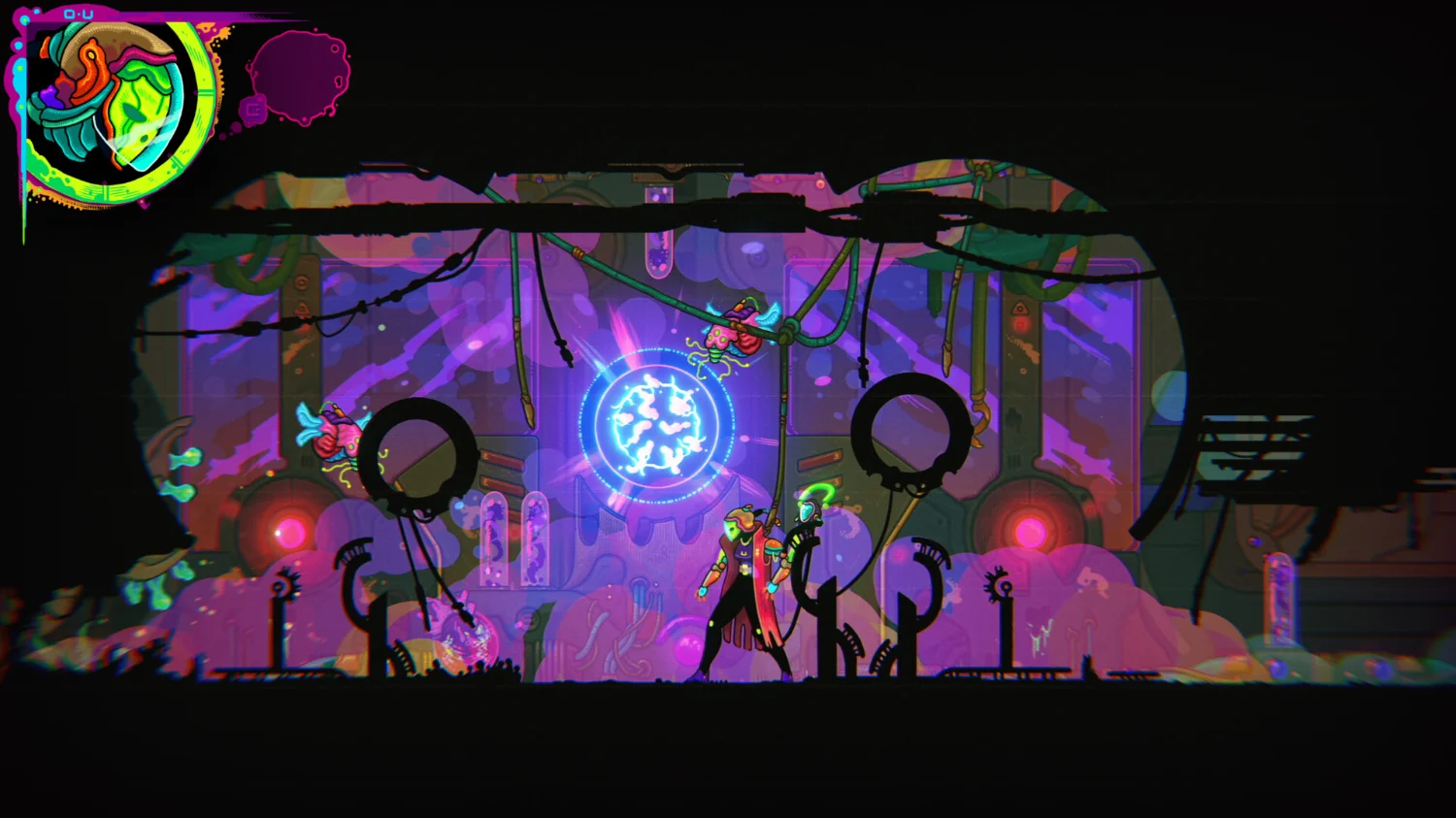
You’re probably wondering - what the hell is a cycle? Fair question - let me explain. While the story of Ultros is quite confusing, your objective is made very obvious. There is a collection of shamasal in the world and you must find and destroy each of them. Shortly after defeating a shamasal, you’ll ultimately encounter a situation that will reset the game’s cycle, sending you back to the beginning of the game.
When this first happened, I thought, “oh great, another roguelike.” But thankfully, that wasn’t really an accurate assessment. It uses this roguelike construct to both move the story along and to help with your exploration of the map. Rather than cycles being a result of failure, they are tightly connected to the game’s progression and happen at predetermined instances, making them feel much different from your typical roguelike.
Additionally, Ultros gives you the tools to retain most of what you’d typically lose across cycles. This capability to make progress durable takes a few cycles to master and a bit of exploration, but I came to anticipate the next cycle and could plan reliably for it, since setting it into motion was contingent upon my actions.
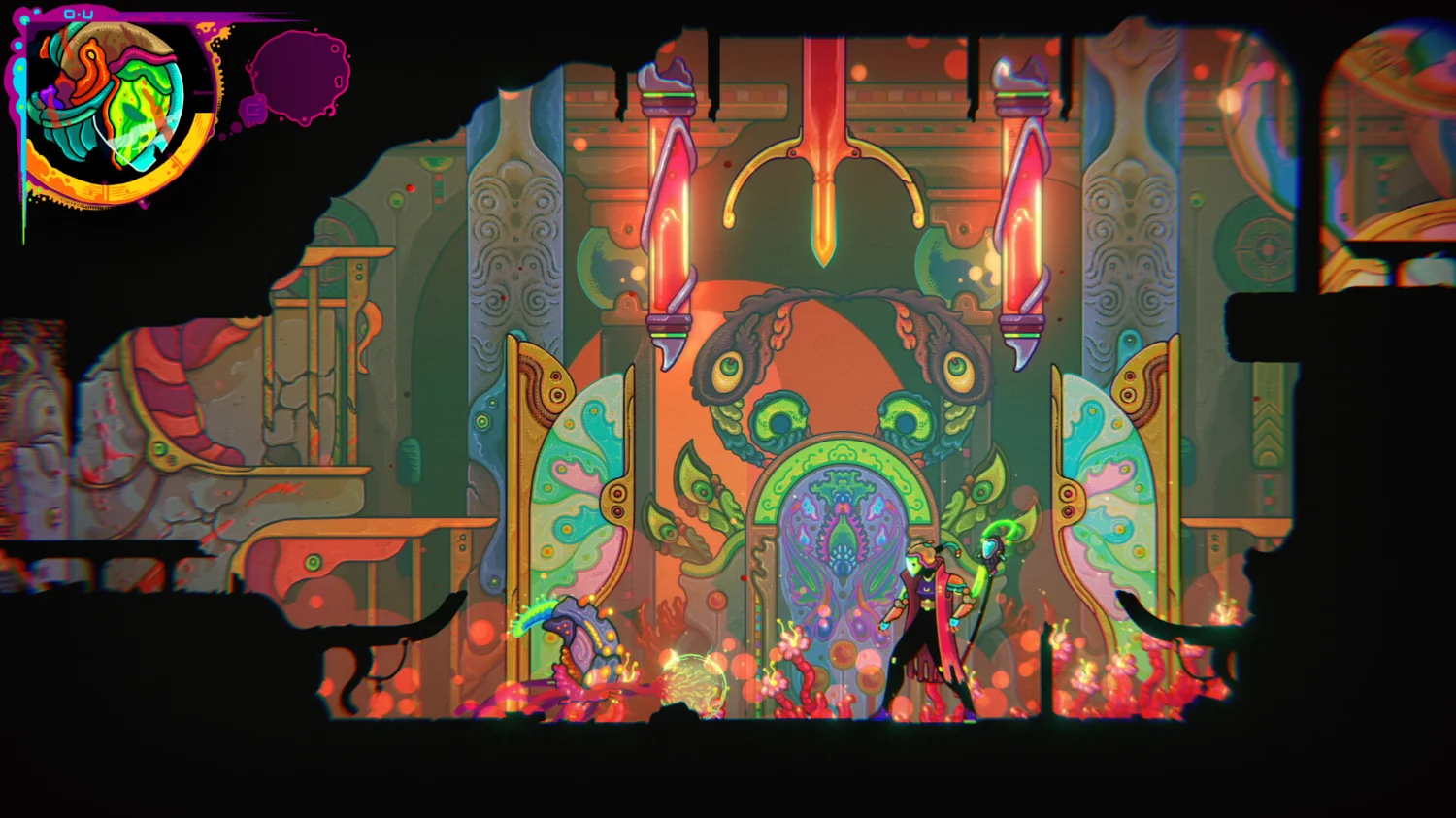
While picking up enemy body parts and eating them is one way to increase the aforementioned meters (KHA, YUG, HWK, and TIP), you can also do that with fruits collected from trees around the world. In addition to fruit, you sometimes will find or be gifted seeds. These can subsequently be planted in any spot on the ground, wall, or floor with a glowing aura coming off of it.
Trees will carry across cycles and provide a crucial piece of the metroidvania puzzle. Each seed will grow a different tree and these trees can be absolutely crucial to reaching new areas or unlocking pathways that are otherwise inaccessible. Across cycles, the trees will grow - some will become handy platforms, others might grow rope-like strands that you can swing from to reach a new area. Others still will just be rich in fruit, offering a convenient and easy way to increase your meters and become eligible for new upgrades.
Hidden throughout the world are flowers that hold Mycelium Memory - these little brains allow you to remember character upgrades across cycles and it doesn’t take long to have a bunch of them in your inventory. So before a cycle ends, post-shamasal murder, it’s easy to plant any seeds you want to retain, eat any food stuffs you’ve acquired, and upgrade and remember any capability within reach. In this way, the negative effects of the cycles are almost entirely mitigated, and instead, you’re left with some strategic decision-making on how to preserve as much as possible before the cycle begins anew.
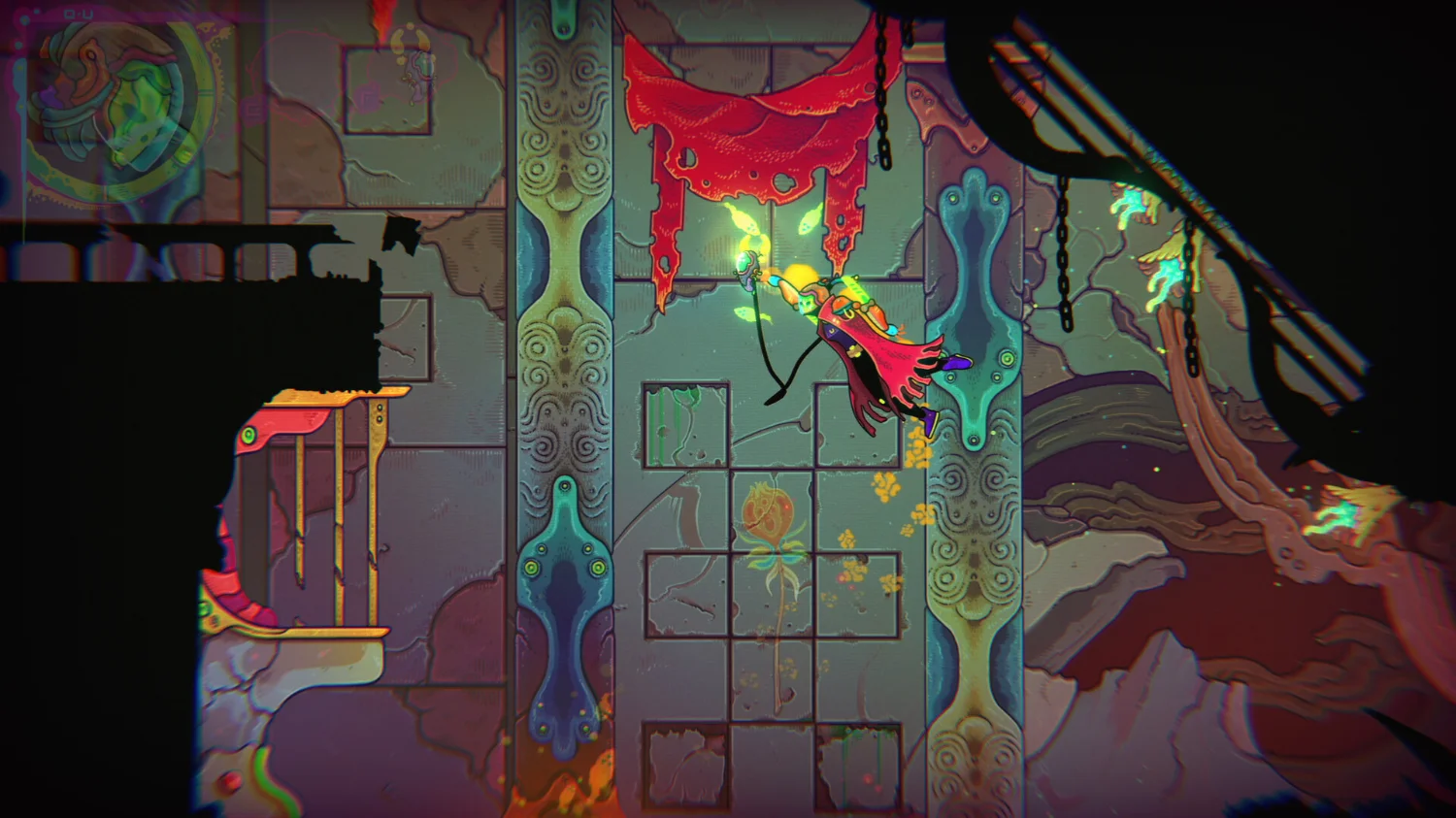
Killing off the shamasal also has another knock-on benefit. Early on, you pick up the extractor (which is also lost across cycles) - each shamasal you dispense of will earn you a new extractor capability. At a base level, the extractor gives you a double jump, but more potent upgrades come in time. For instance, one allows you to turn it into a rocket pack when in the presence of a yellow substance, giving you a chance to jet around the area. Others will allow you to recover seeds from the ground or move tree limbs around to your advantage.
The game carefully weaves each cycle to ensure you get the extractor back at the moment it’s appropriate - because you spawn without it, new cycles can be carefully crafted to send you in particular directions that avoid where the extractor is normally located. In this way, despite the metroidvania and roguelike constructs, the game is surprisingly linear, but never really feels like it.
It’s a brilliant little set of mechanics that interplay extremely well, allowing the developers to tell a story, gate progression and push you around the world without giving you total and complete freedom. By the end of the game though, you will finally have the majority of the world open to you and you can travel about to collect anything you might’ve missed, tend to the trees you’ve planted, and make new lush gardens wherever you’d like.
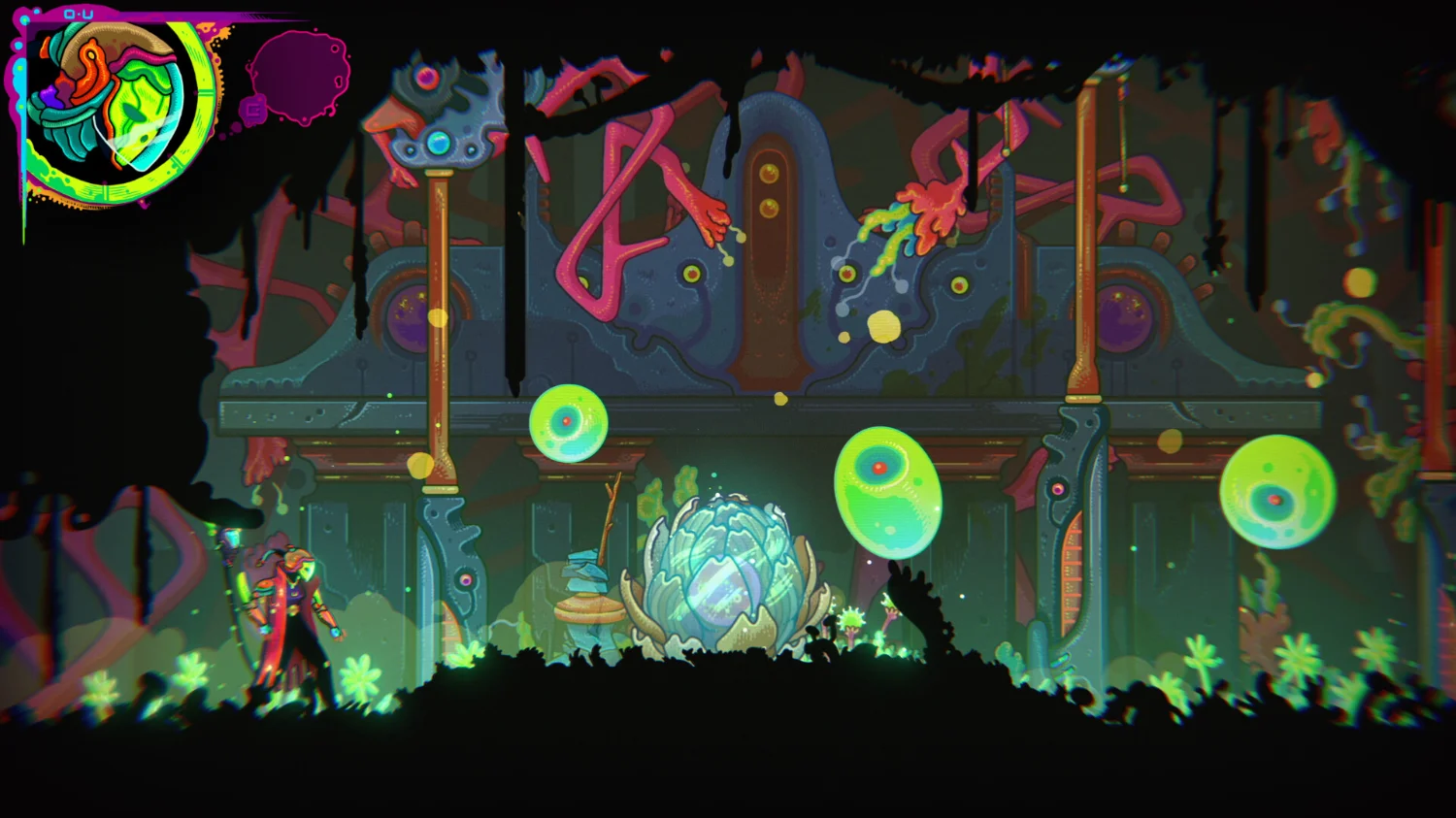
Ultros surprised me, which isn’t easy to do these days. It takes some well-known game designs and repurposes them in a unique and interesting way. My only real gripe came down to some of the later extractor-based segments that felt like it required some really fiddly control with the right stick to move tree branches to the specific location desired, while avoiding spinning blades. A relatively minor issue in the grand scheme of things, but it did slow down that part of the game pretty significantly.
As a cohesive package, Ultros doesn’t disappoint. I went in because the art was cool and eye-catching, but I left impressed and surprised by the experience, eclipsing even the impressive visuals. If you’re willing to try a new kind of Metroidvania experience and don’t mind bearing with the game while it unveils itself to you, you’re in for a real treat with Ultros.