

Even from the outset, Pseudoregalia proves to be a fascinating game. Visually, it's striking - evoking the PlayStation 1 - you won't see many games that look quite like it these days, and few, if any, are able to pull off the style successfully. Similar to a title on the PlayStation, you're dropped into the game without much fanfare and with only the ability to jump. You have no map to help you navigate, no weapon to defend yourself, and compared to later in the game, extremely limited mobility. Exploring Castle Sansa and its surrounding areas will net you a sword and upgrades to it, as well as myriad upgrades to your movement abilities, enabling you to reach more parts of the castle.
This metroidvania-style design proves extremely effective for the pacing of Pseudoregalia. At first, you'll learn the ability to do wall kicks, of which you can do three in the air before exhausting the ability. With deft placement of where you choose to kick the walls and the angle you hit them at, you can maximize your usage of this ability to reach new heights and distances. If you are persistent enough, you can do a lot with the smaller moveset early in the game, sequence breaking the intended path. While games of this style typically try very hard to keep you on the intended path, Pseudoregalia makes no such demands. Sequence break, find later upgrades earlier, the game is still extremely navigable either way.
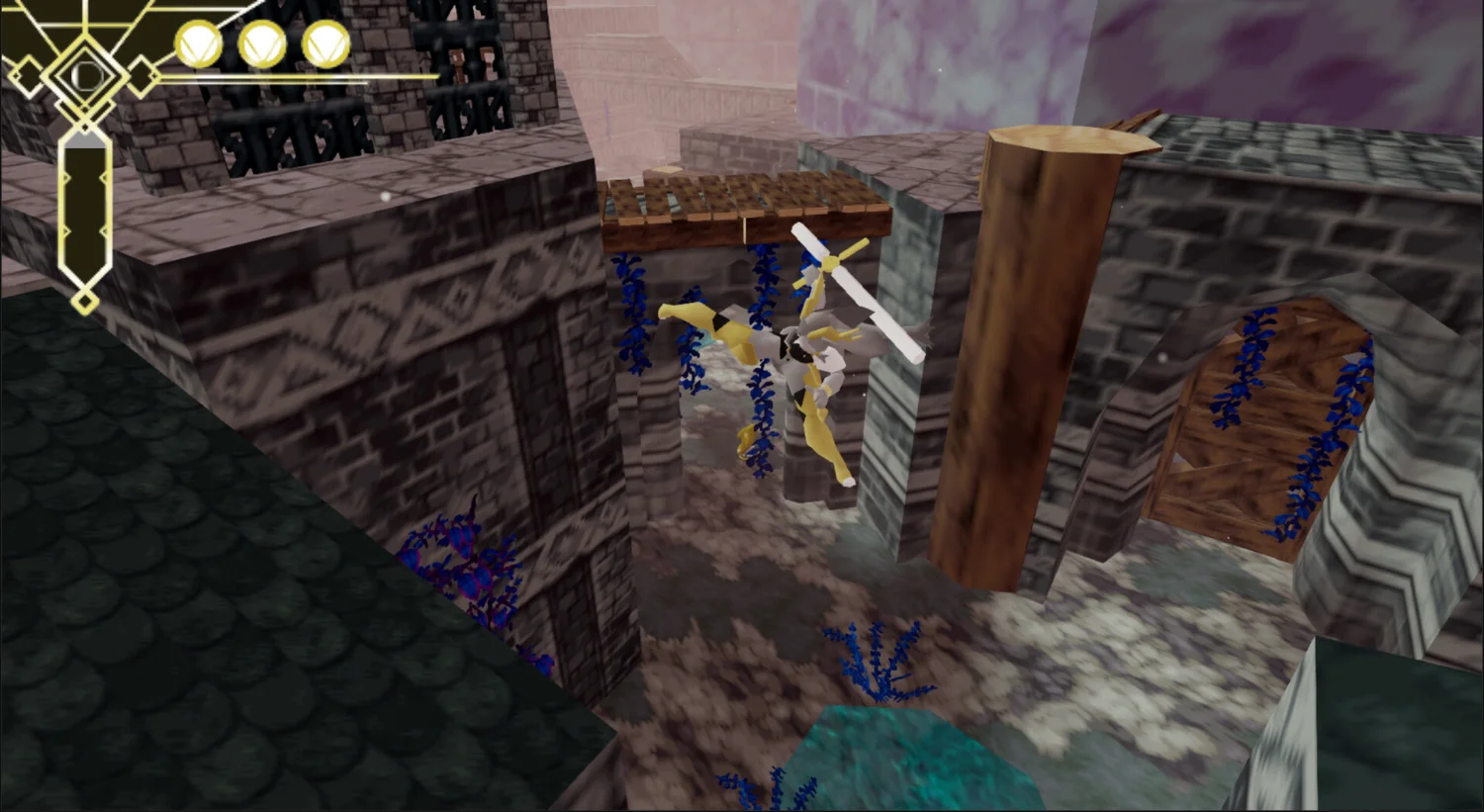
Eventually you will earn some other key upgrades like the ability to smash downward, which allows you to break through some floors in the game, but more importantly, performing a jump after hitting the ground will allow you to perform a high jump. You'll also find a slide and then a jump that pairs with it after to create a mega-long jump that feels very good to perform and helps you move very fast. Later the wall cling will allow you to run along walls, further opening up the possibilities for your character Sybil to navigate the castle.
All of this platforming is to find the five gold keys in the game, which will grant access to the final boss. You don't necessarily need all of the aforementioned upgrades to ultimately complete the game (or the various others you will find along the way). From seeing the game at GDQ some time ago, I believe only the slide is absolutely necessary to reach the ending (though it's quite difficult without the long jump that follows). But forget that - the joy of this game is exploring and performing the complex platforming maneuvers to reach all of the upgrades in the game, in addition to the main keys.
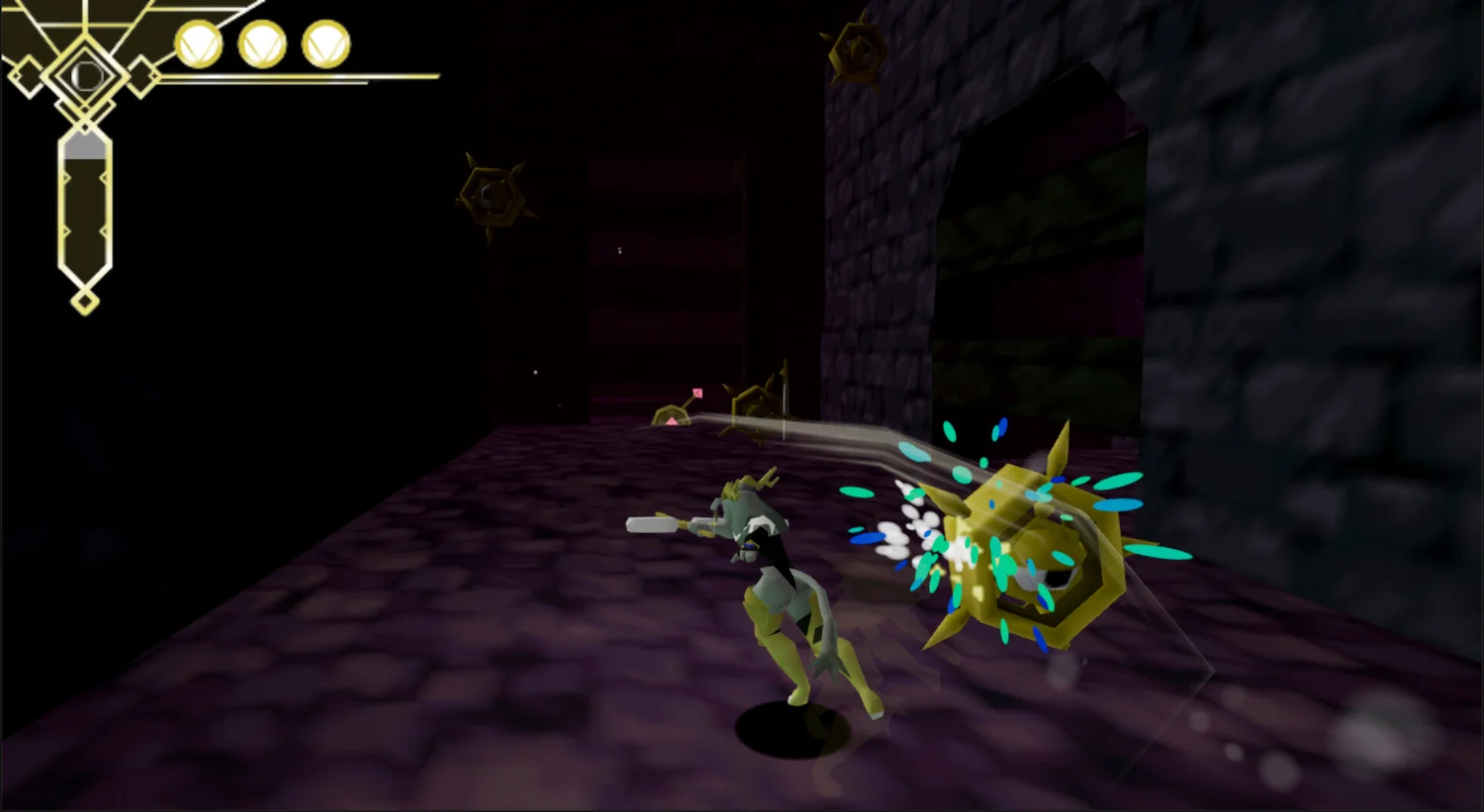
Pseudoregalia also offers some sword-based combat, though it's not a major part of the game. Fighting enemies isn't very challenging and the lock-on mechanic feels kind of weird as you need to hold the R button down to stay focused on the enemy. That said, the game does offer a nice system that pairs with the combat that ultimately ties back to the platforming. For one, there is a sword upgrade that lets you hit enemies or black orbs and stay in the air (think The Messenger), which is very useful later on in the game. The other relates to a magic bar that fills up as you attack enemies. Once this bar is full, you can upgrade it to level 3 by continuing to attack enemies, which will make your attacks stronger and hit from a further distance. After an upgrade, you can use the contents of this bar to refill your life, but it will cause your level to drop, lowering your attack prowess.
As you take on the more difficult platforming in the later areas, you will undoubtedly fail a lot, so having a little reserve to refill your life can be extremely helpful to take another few swings. Save points will also refill your life, as will little stools or benches set throughout the world, if you sit on them. The game is very good at making sure you're never too far from a save point and because the game often loops back in on itself, it's easy to start internalizing where save points are.
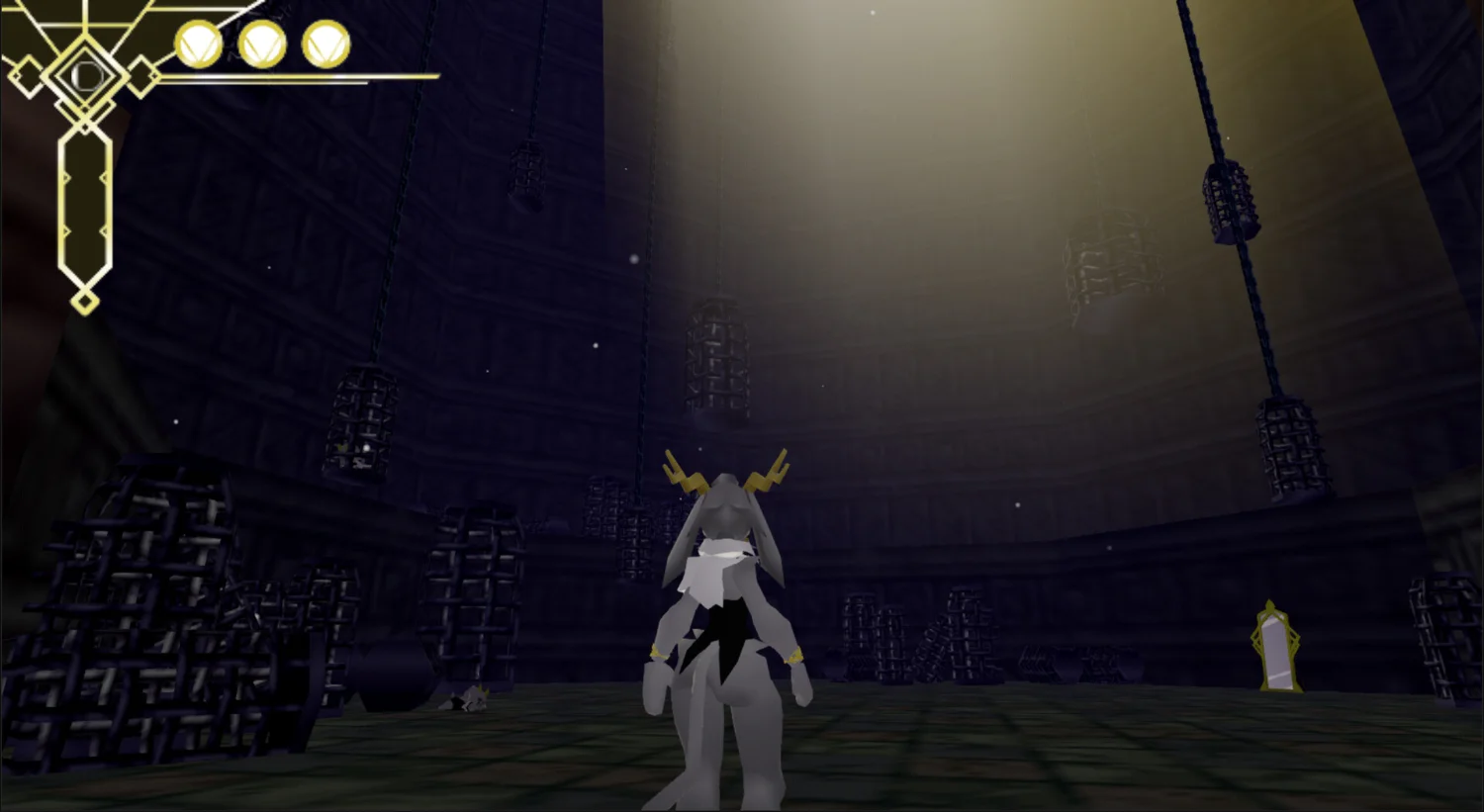
Of course, when you finally find the map, that helps tremendously. It's my understanding that the game did not launch with this feature, so if you tried this in the past and couldn't help but get lost, it might be time to give it another try. At the point I found the map, I was starting to go in circles, so it was a boon to be able to see exactly where other exits were in a big room that I was just missing.
As the game went on, I became more and more proficient in how I was able to navigate the world. Completing the complex challenges to unlock silly outfits stopped being brutally impossible and became a simple matter of clean execution. This kind of high-skill ceiling platforming is one of my favorite things. Whether it's 3D or 2D, give me a mess of abilities and force me to get good at chaining them all together to conquer difficult challenges.
That said, there is a little bit of jank sometimes. It can be a little too easy to accidentally cancel a move instead of slamming the ground, leading to a slow backflip, and your inevitable progress loss. The wall geometry in some spots can also be weird, so grabbing ledges or wall kicking might not work out at the end of long sequence, forcing a redo. That said, this is a minor complaint - the vast majority of the experience is flawless and there were scant few instances where this problem reared its head. Plus, movement in this game just feels good, so redoing a section never really bothered me, since it's a common part of the experience regardless.
I'm glad I checked out the Steam Summer Sale, as this has been on my wishlist since I saw it on GDQ over a year ago. For less than $5, I spent about 8 hours in the world of Pseudoregalia and managed to collect just about everything in the game. But even at its full price, which I believe is $6, you really cannot go wrong. If you enjoy exploration and tight platforming, you will fall in love with Pseudoregalia - I know I did.

Wow, it really nails that PS1 look!
PS1 jank! Love it.