
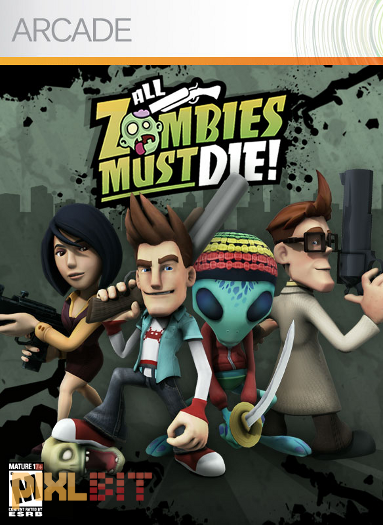
Until Lucasarts does something with their cult classic Zombies Ate My Neighbors, this is the true spiritual successor to the classic SNES/Genesis multiplayer zombie killing simulator. From the overhead perspective to the cartoony visuals and wacky weapons, this game brought warm, fuzzy memories to someone that spent hours with Zombies Ate My Neighbors. With weapon crafting, RPG stat building, and four player co-op, this is the game I would have wanted had the series continued past Ghoul Patrol.
I would call myself a gaming enthusiast – someone who can appreciate just about any type of game for its unique merits. As such, I rarely see any game as a complete and total waste; Zombii Attack is one of those rare exceptions. Surely, it'd be better off buried somewhere out in the desert next to the Atari version of E.T..
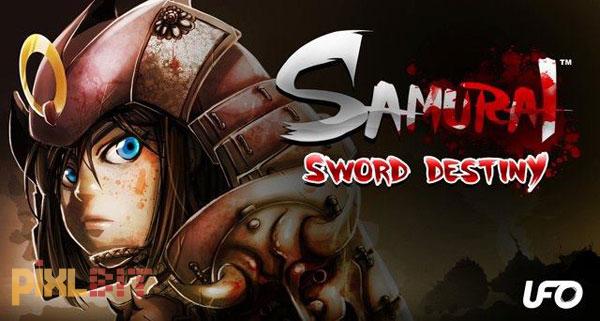
Given the touch screen of the 3DS, it’s no surprise that iOS game, Samurai Sword Destiny has made its way to the Nintendo eShop. What’s also unsurprising is just how shallow the experience is, given Destiny’s original home. With a combination of two level types, players will find themselves either slashing arrows and avoiding boulders during forced progression, or dispatching a variety of foes by continuously slashing back and forth until all enemies are defeated. It’s a mindless timewaster that doesn’t command its price.
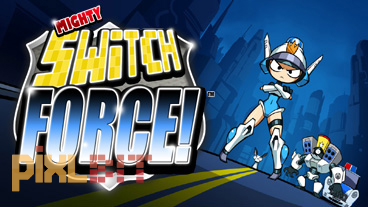
It’s almost eerie how much Mighty Switch Force reminds me of an SNES game. It’s not bogged down at all by story, character development, or anything that normally keeps a game from moving forward. Players are dropped into a world with no explanation of who they are, how to use their abilities, or what they must do in order to complete the level. Despite all this, it comes naturally, as if you’ve played it before and already know exactly what to do; a sure testament to the game’s fantastic design. Unfortunately, like many an SNES game, it’s over all too quickly.
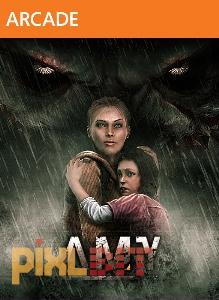
If there’s one thing that’s clear about Amy, it’s that developers, VectorCell, were in over their heads. Borrowing concepts from many of the popular titles in the survival horror genre, Amy attempts to mix puzzles, stealth, combat, escort missions, and even psi-powers in a post-apocalyptic setting crawling with aggressive monsters. The ambitious downloadable title fails to provide the necessary polished gameplay and is host to numerous technical issues, as well as poor mechanics and antiquated design.

NFL Blitz is a franchise with an interesting history. Going from being an actual NFL-licensed property with a relatively deep strategic angle, to an unlicensed product that seemed like it was truly gunning for ESPN’s highly-supported television drama, “Playmakers,” Blitz: The League (as it was re-branded) attempted to take a more “realistic” approach to the concept of video game football. This “realism” included bone-shattering and skull-destroying injuries that could be inflicted upon players. Despite these changes, Blitz: The League found its way into my heart very quickly, eclipsing the merits of both its arcade and home console predecessors.

Reviewing VVVVVV is about as tough as getting your head around its title. It’s an odd game that sticks out in a crowd. It’s simple, yet quirky. It’s hard not to want to pick it up and play it, yet once consumed it becomes difficult to formulate an opinion on. But that’s precisely my job, to form an opinion and disseminate that to you, the reader. The review that follows almost mirrors the end experience with VVVVVV – somewhat unstable but worth taking in.
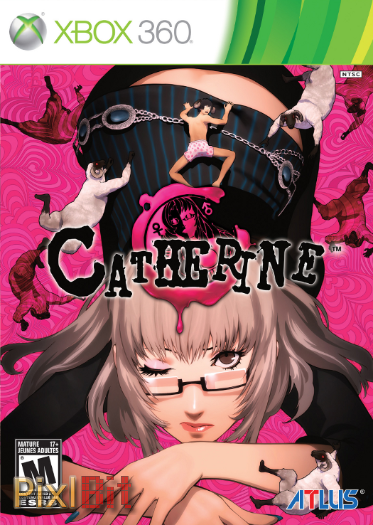
It’s not often that the gaming world is delivered a title with such depth, difficulty, and intrigue as Catherine. Its dual gameplay elements blend aspects of the Persona series with extremely challenging puzzles alongside subject matter that has never truly been explored by a game before. While it suffers from its fair share of problems and squanders some of its own potential, the difficult gameplay will leave players with a sense of considerable satisfaction and the twisted story will keep them guessing.
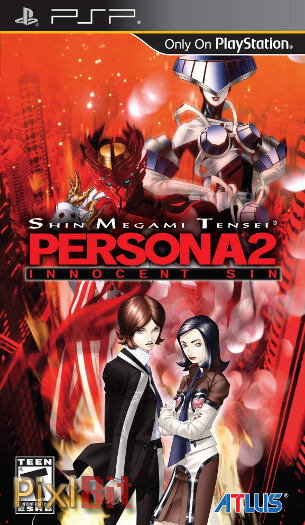
As a fan of the Persona series, I'm delighted by the release of Innocent Sin. It's the one chapter I've never been able to experience, solely because it was left in Japan more than 12 years ago. Now that it's here, my feelings on it are mixed at best. Truth be told, Persona 2 is not a game that has weathered the years well. It's full of old school RPG designs and has been completely eclipsed by Persona 3 and 4. At this point, Innocent Sin is a game that only the most diehard of fans will be able to appreciate.
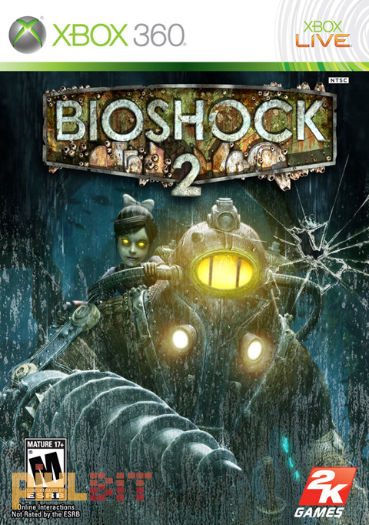
Bioshock was not a game that needed a sequel. It told a story and concluded it nicely. It didn't leave the door open for a future tale – this was made all the more apparent when the second game didn't bother to continue from the events of the first. Instead, it creates a whole new cast of characters and retcons the antagonist of the story into the events of the first game. The poor, hackneyed story is only the start of the problems with Bioshock 2.

Despite the apparent quality of Bioshock, it has taken me nearly five years to explore the world of Rapture and the demented mind of Andrew Ryan. After initial hype painted the experience to be something more akin to a puzzler than a shooter, I was extremely excited… until I actually played it. It wasn't at all what I expected and that was enough to force me to shelve the game until the right time. Thankfully I did, because revisiting it all these years later has allowed me to have an immensely enjoyable gaming experience.
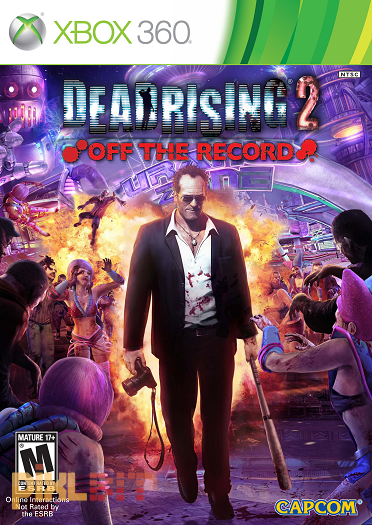
Over a year ago, Capcom released the original Dead Rising 2. It starred brand new protagonist Chuck Greene, a character I actually liked. Unlike Frank West, he had a backstory worth caring about, as well as a personality befitting of a hero. In an effort to protect his daughter and deliver her the Zombrex she so desperately needed, he saved dozens of lives and uncovered the origins of the zombie outbreak in Fortune City. For whatever reason, fans didn't like Chuck Greene much and Capcom has since taken strides to nearly write him out of the series. Off the Record goes as far as retelling the same story with Frank West in his place. Given that the retelling comes with a slew of upgrades and an entirely new mode, it's most definitely a better game; however, Frank West still doesn't resonate with me as a character, nor does his signature picture-taking ability as a gameplay mechanic.
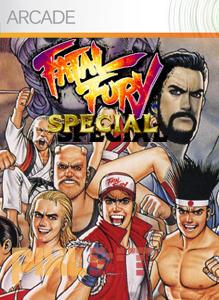
Released around the start of the rivalry between SNK and Capcom in 1993, Fatal Fury Special proved to be a real contender to Street Fighter II. It also followed Street Fighter’s example, as it was an updated edition of Fatal Fury 2. Now that the arcade classic has returned in the form of a downloadable title with online functionality, is there still a fire in Terry Bogard’s Burning Knuckle?
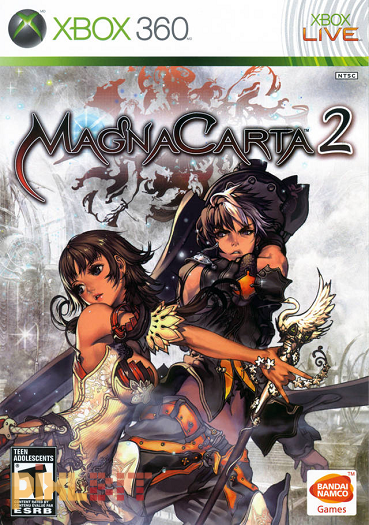
Magnacarta 2 is the latest entry in the historically unremarkable Korean RPG franchise. The first appeared on PC, and the second, better known release, called Tears of Blood, was released on the Play Station 2. There have been quite a few changes since its last appearance: it's on a new platform, has a newly overhauled combat system, has a new world and story, and uses the newer, flashier Unreal engine 3 to power its visuals. The one thing that hasn't changed, however, is the fact that the game still remains unremarkable.
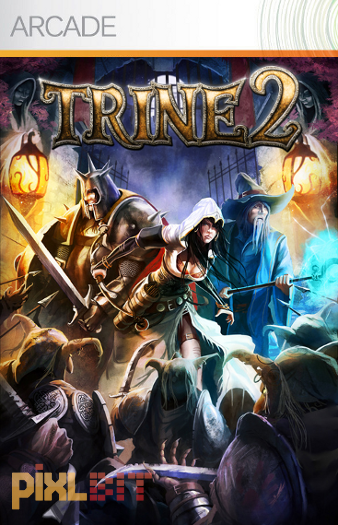
It’s obvious that Trine 2 is trying to impress. The bright and vibrant visuals paint a particularly lovely picture and the music is appropriate – thunderous at times and ambient at others. The production values suggest it may be one of the best puzzle platformers released in quite some time, but after digging a little deeper it only proves that you can't judge a game by its looks alone.
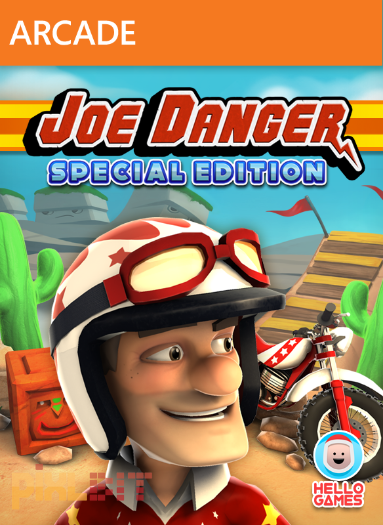
Joe Danger: Special Edition is about the daredevil Joe Danger who is attempting to make a comeback after an accident in a previous stunt. The colorful graphics and exciting soundtrack give the game a great presentation and gets you pumped to do an assortment of tricks and tasks. It has a very old school, arcade feel that’s been polished for this generation.
These are two versions of the last game released in the ClayFighter series, which spawned as a spoof of the fighting games which were all the rage in the early-to-mid 90's. As I'm no fan of fighters, I don't really know how this series compares with traditional fighting games, but I always appreciate the seldom appearance of a videogame parody. Unfortunately, this one seems to be all style and no substance, and even the theme can wear thin.
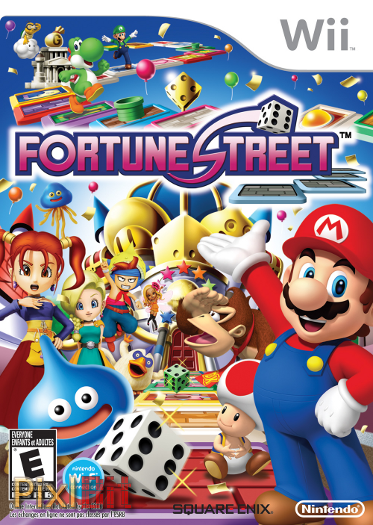
Marooned in Japan for two decades, Nintendo and Square Enix finally have seen it fit to bring the Itadaki Street series to North America in the form of Fortune Street for the Wii. Despite the series piquing my interest after the strong reception of the DS version in Japan, it's largely been a mystery to me. Now that I've had a formal introduction to the series, I can say that it's been well worth the wait. Cozying up more closely to Monopoly than Mario Party, Fortune Street is the perfect game to play with a group of friends and/or family members, even if they're not fans of video games.
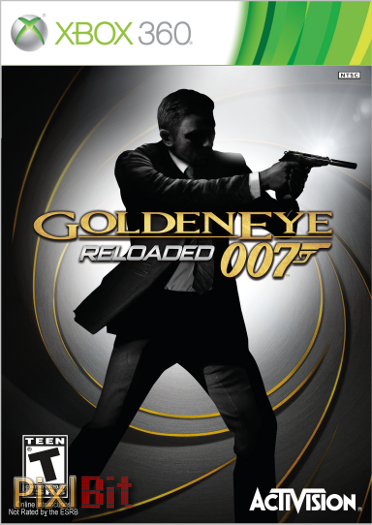
The original Goldeneye on the Nintendo 64 should have been just another movie tie-in game. However, with Rare at the helm, it became one of the most important games in video game history. The fast paced gameplay and incredible multiplayer made it one of the best games of 1997. After being a beloved game for 13 years, Activision (now holder of the James Bond license) released a reimagining of the game for the Nintendo Wii. Now that reimagining is available on the Xbox 360 and PlayStation 3 and the rules are a bit different because of that. Although there are shooters on the Wii, they are absolutely plentiful and then some on the PS3 and 360. So it’s not enough to be a good shooter; you need to be different as well. So does Goldeneye 007 Reloaded stand out from the crowd?
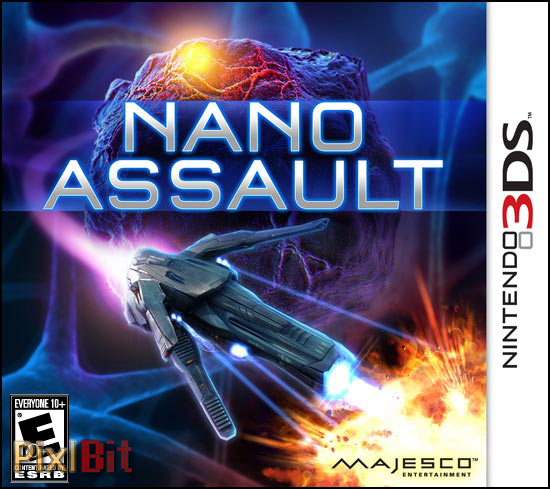
Does anybody remember Body Wars at EPCOT? It was one of those simulator rides that had the passengers shrunk down in order to enter a human body and carry out some kind of mission. I honestly can’t remember what that mission was or even if it was successful, but I do remember how amazed I was as a young child, flying through a complete stranger’s cardiovascular system, red and white blood cells zooming by my head. It was an awe inspiring experience that has stayed with me, perhaps through the nostalgic lenses of rose colored glasses, and it’s a memory tapped by Nano Assault on the 3DS.
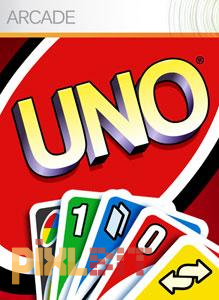
At the launch of the Xbox 360, the new Xbox Live Arcade service was introduced but there wasn’t a lot to be excited about. Oh sure, ports of Smash TV, Bejeweled 2, and Geometry Wars: Retro Evolved is fine but there was nothing of real substance in the XBLA launch lineup. Fast forward to May of 2006 and a digital version of the card game UNO is released. In less than a year’s time, it becomes the first XBLA title to surpass one million downloads. How is it that a title like this has become so successful? UNO succeeds because of the simplicity of the rules and the simple controls.
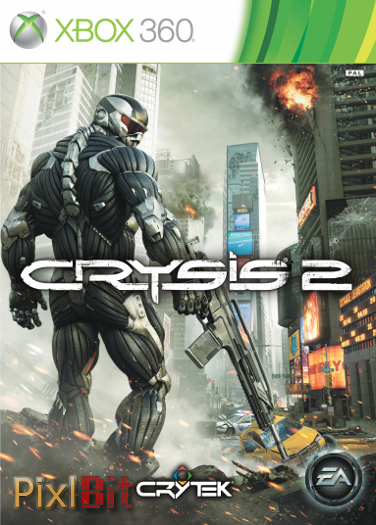
Reportedly, to play Crysis 2 on the PC, you would have to spend thousands on a graphics card composed of subatomic particles captured in the Large Hadron Collider. Anything less would require one hand on WASD and another pointing a fire extinguisher directly at your GPU. Problem is, we never heard about why this game might actually be worth playing besides eyeball-blasting gorgeousness. Maybe a mention or two about the alien invasion story that is actually engaging, or the body armor that spices up the standard FPS routine would have caused more demand to port the thing to consoles. Console gamers rejoice, Crysis 2 is now available on the box under your TV, and all of us with Dell assembled econo-computers can finally give the game a try. It’s a good thing too, because all shooter fans should dive in and experience this beautiful and well-made game.
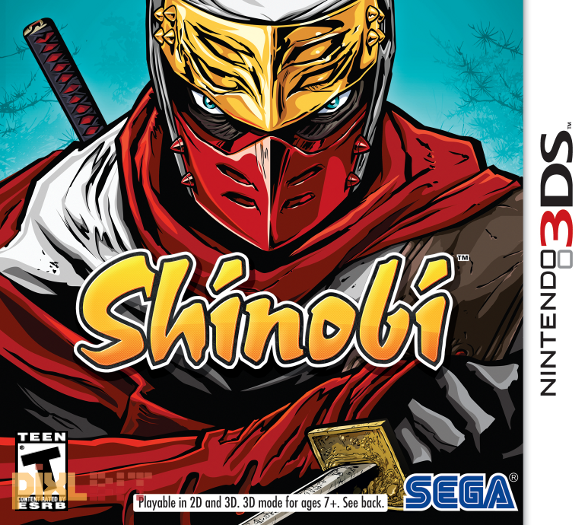
Out of all the 3DS titles released this year, Shinobi is the most likely to become a hard-to-find cult classic. Even with all of its faults, hardcore fans will find more than enough content to feel fulfilled. The developers at Griptonite have reinvigorated a dormant series that has stayed true to its roots as an unforgiving, relentless, combat-based platformer.
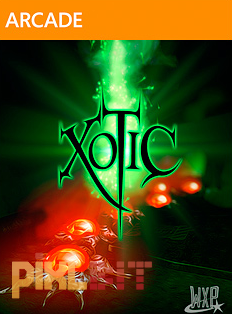
Xotic is a peculiar beast. Developer WXP Games has created something that’s somewhat hard to describe yet familiar when you actually play it. As the reviewer though, I need to do my best in doing so. Okay. Xotic (pronounced like exotic) is a first person shooter with an emphasis on scoring and clearing a level like that of a puzzle game. You are sent to stop the Orb, which is a being that evolved beyond its physical body and has gone mad and is now destroying planets. The way you accomplish this is by completing each level by destroying enemies, collecting power-ups and shooting orb plants in order to get a combo going and raise your high score. Despite impressive art design and surprisingly deep game mechanics, none of this actually melds into a cohesive whole and you’ll be left disappointed at a game that at first held promise but quickly grows frustrating.
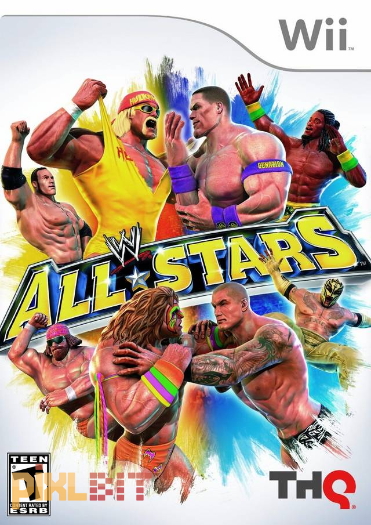
I've basically been a wrestling fan three times in my life. When I was ten, I first discovered the (then) WWF, and loved to watch Hulk Hogan, The Ultimate Warrior, and "Superfly" Jimmy Snuka. I got pulled back in around 1998 with the release of WWF Warzone for the PSX, and came to enjoy The Rock, Triple H, and The Hurricane. Most recently I've gotten back into the wrestling scene, thanks to some entertaining people like John Morrison, Kofi Kingston, and CM Punk. So, while I haven't been a wrestling fan the entire time, I can appreciate what THQ has done with WWE All-Stars: a game that takes all of those eras and allows those wrestlers to go toe to toe.