
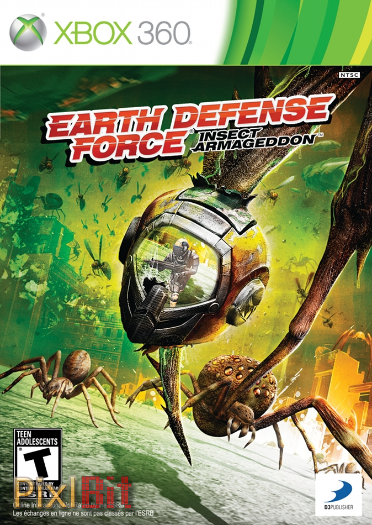
There's no question that die-hard Earth Defense Force fans may be a little turned off by the latest title in the series, Insect Armageddon. As something of a spin-off of the main series, the title has been developed by western studio Vicious Cycle Software, rather than the typical folks at Sandlot in Japan. In the shift to D3Publisher's western office, Earth Defense Force has seen some slight changes in an effort to build a stronger third person shooter for western players. As someone who has enjoyed the likes of 2017 and Zangeki no Reginleiv, the changes are a mix of both good and bad.
Take everything that makes a JRPG what it is, compress it down to thirty second slices and you’ll find yourself with Half-Minute Hero from Marvelous Entertainment. A fun and spastic gameplay experience. OK, I’m done, go play it.
I’m not a choosy gamer. I’m probably one of the most happy-go-lucky gamers in the world. When I play a game, I focus on what I like about it and try to ignore what I don’t like. If a game has flaws I try not to think about them and enjoy what the game got right. I also have a wide variety of tastes; the only two categories I don’t like much are fighting and sports. It’s pretty easy for me to enjoy a game. In fact, other than some sports and fighting games, I’ve probably never played a game I didn’t like on some level. After Carmageddon 64, things will never be that way again.
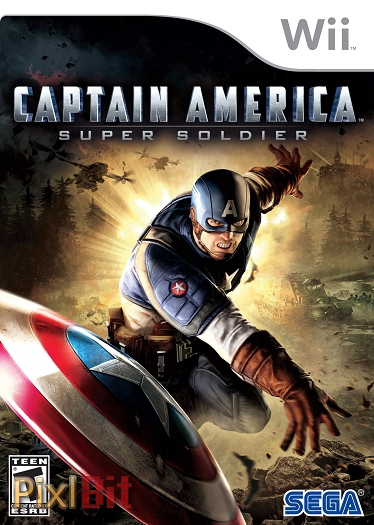
I hate to say it, but I've always disliked Captain America. He's a lame superhero who's in possession of no super powers whatsoever. Sure, he's a peak human specimen thanks to the Super-Soldier serum, but that still makes him pretty dull in comparison to most other superheroes. It also makes him pretty on par with most video game characters that share many of the same abilities. The Prince from Prince of Persia comes to mind – both are acrobatic, strong, and can defeat hordes of enemies without breaking a sweat. The difference between the two? The Prince starred in a great game – Captain America, a mediocre one.
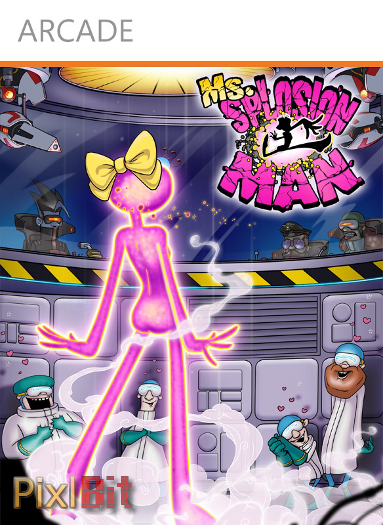
A follow-up to the 2009 'Splosion Man, Ms. 'Splosion Man is a simple 2D platformer with high speed and puzzle elements. The titular missus can explode up to three times before landing on the ground, resting against a wall, or detonating with a bomb to recharge, propelling herself through the game's frantic point-A-to-point-B-style levels. Like its predecessor, the game is full of jokes and quirkiness. Is Ms. 'Splosion Man the bomb or just a dud?
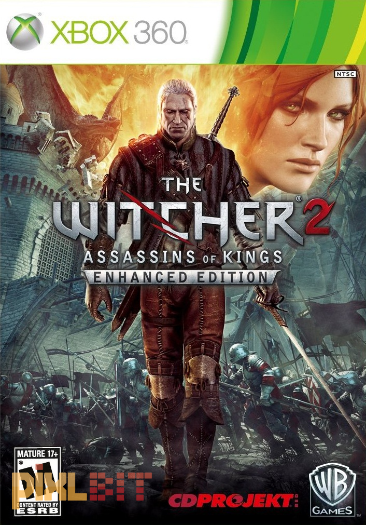
The Witcher 2: Assassin of Kings is arguably the best role playing game to have come out this year and can easily be ranked as one of the top Western RPGs in the last decade. It is that rare game where you can tell the team over at CD Projekt Red truly loved the source material and put in all the effort they could to convey the story of Geralt of Rivia, as faithfully as possible, to anyone who plays the game.
Unlike its predecessor, this second DLC pack is a tough sell. You’re essentially shelling out $9.99 for a boss fight, and one that, if you’re incredibly skilled at the game, will take you less than hour. I am apparently not that great because I was close to quitting out of rage.
Reverie was the first DLC released for Lords of Shadow and is, in my opinion, the more worthwhile of the two. Picking up literally right after the end of the core game, we find Gabriel Belmont contemplating the recent events of his life, when the voice of Laura, the little vampire in Carmilla’s castle, invades his mind and begs him to return to the castle. Gabriel, though disenchanted with the world, decides to heed her call and heads off.
Please note that this review will not cover 3DS Virtual Console or Super Game Boy features.
I have a confession to make: I hate the original arcade Donkey Kong. Yes, sneer at me all you want, but I have good reasons for disliking it so much. While I have been very spoiled by Mario platforming adventures, his first battle with Donkey Kong is not something I eagerly replay. Note that this is coming from someone who enjoys games like Ms. Pac-Man, Galaga, and Dig Dug (notice a pattern here?); I will admit that the original DK arcade game has some sound elements that would set a benchmark for Mario’s debut, but with those awful jumping mechanics Donkey Kong isn’t a game I rate highly.
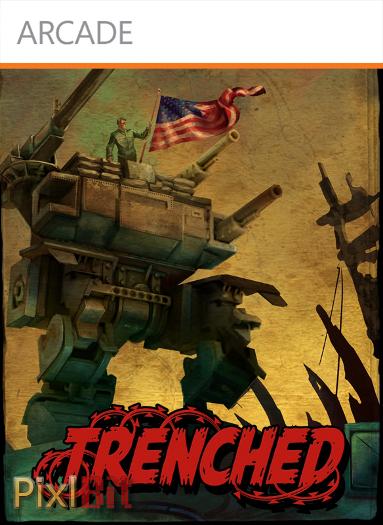
Ever picked up an enchanting book which starts off strong with a variety of colorful characters, an interesting plot, and a great setting, making for an engrossing experience that seems to be heading somewhere grand? Ever felt that sort of emptiness inside your gut when that same book just moves in circles, and no early plot elements are fleshed out, where the characters never express their true personality, and event after event feels the same? That's Double Fine's Trenched. An unbelievably well-shaped game with great characters, solid gameplay, and an original setting. Where does Trenched take it? Sadly, practically nowhere, leaving an emptiness inside that was expecting much, much more.
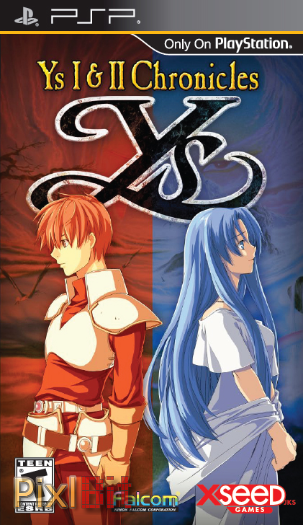
I get the distinct impression that Nihon Falcom wasn’t too happy with the DS remake of Ys I & II, Legacy of Ys: Books I & II. The two games have been remade once again, this time on the PSP by Nihon Falcom, the original developers of the series. Having played the TurboCD version of the games, as well as the DS remake, I can safely say that this PSP remake is the truest to the original titles; however, its return to form has excised my favorite improvement introduced on the DS: 2D Zelda-like control.
Now that I’ve finally gotten around to playing the latest Assassin’s Creed title, I’ve also gotten the opportunity to play the related DLC, which functions well as a standalone extra after completing the quest, or as an integrated set of tasks into the rest of your objectives. The Da Vinci Disappearance is quite the hefty offering, clocking in at around two hours of gameplay in its single player exploits. The DLC also adds a couple of new modes to the multiplayer mode; your mileage with the new content may vary.
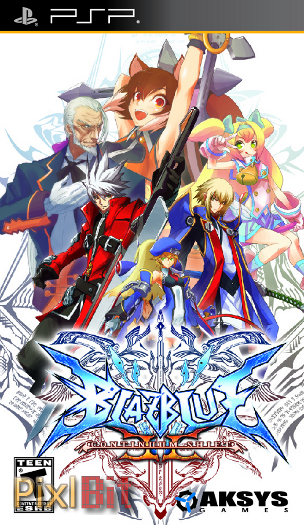
BlazBlue: Continuum Shift II is a PSP Port (hence the “II”) of Continuum Shift, which was released first for arcade and then for PS3 and Xbox 360. The port differs slightly from the original: it includes all the DLC characters from the start, and it features a new Abyss mode (more on that later). Like the other titles in the series, this game is outrageously complicated. It’s clearly made for a niche audience (“hardcore” fighting game enthusiasts) of which I am not a part. But, complexity aside, the battles are fun and nice to look at, so it seems they’ve struck enough of a balance that even those who don’t really know what they’re looking at can enjoy the view.
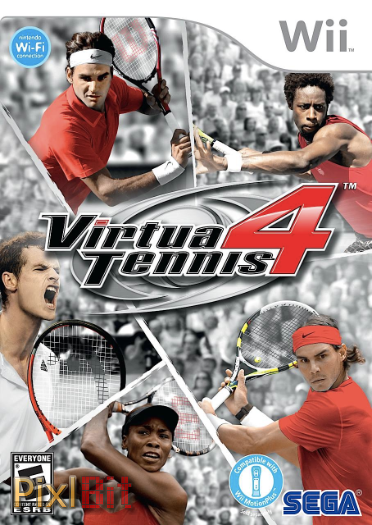
Virtua Tennis has been going strong at this point for over a decade. Having played every game in the series, it’s clear that the gameplay has not evolved much, but that’s because the fundamentals that were introduced in the first game were so solid they aren’t in need of much more than slight tweaks. Instead, Sega has continued to make the game more fully-featured to help draw in new players. Virtua Tennis 4 is impressive in scope, offering a huge variety of mini-games within the main quest, a solid selection of real life tennis superstars, and a motion control centric mode that works surprisingly well with the PlayStation Move controller.
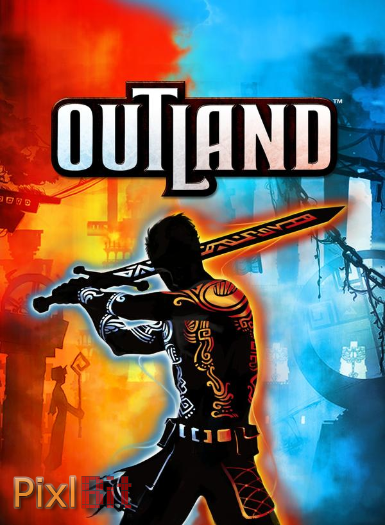
Metroidvania games are unquestionably some of my favorites. While there aren’t too many produced outside of the titles from where the subgenre name is lifted, they are often a treat when they become available. Outland is no exception to this rule, offering up a 2D platformer that places a far greater focus on its action elements, requiring players to master movement, attacking, and timely switching between a light/dark mechanic.
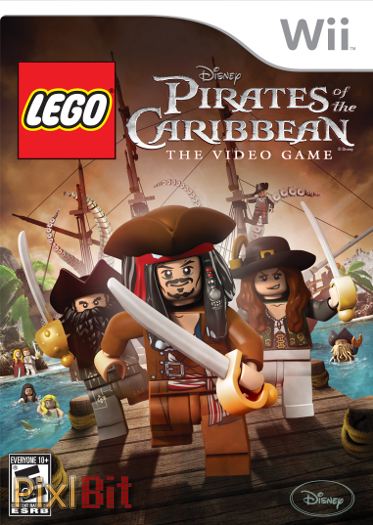
I grew up on LEGOs, making submarines and castles, creating stories out of blocks. This is my first experience with a LEGO game, and though it’s not the same, I still had an incredible amount of fun.
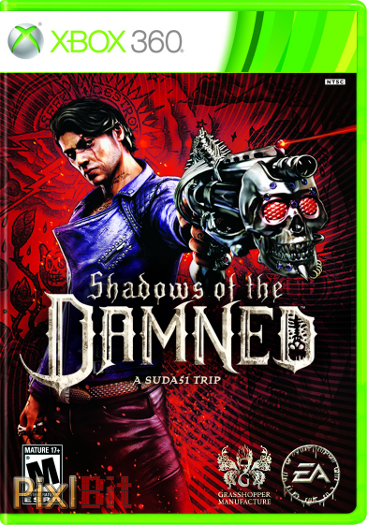
Shadows of the Damned is clearly Suda51 and Grasshopper Manufacture’s most polished game yet. Whether it’s due to the influence of Shinji Mikami as the creative producer or due to some maturation of Suda51’s style and execution is unclear, but the 10 hour romp through hell is chock full of style, humor, and solid gameplay that trips only slightly along the way. While Suda51’s previous titles can be a bit tough to get into for the average player, Shadows of the Damned is much more accessible and will likely appeal to a much greater audience – assuming they can tolerate the never ending onslaught of penis jokes.

While this game has been out in arcades for at least six months now, Super Street Fighter IV: Arcade Edition has finally made it on to home consoles after much demand. Aside from the four new characters and controversial balance changes, Capcom went the extra mile to add to the online experience with some unnecessary, but valued and interesting features. Does Arcade Edition have what it takes to warrant a purchase, or is it just another useless DLC?
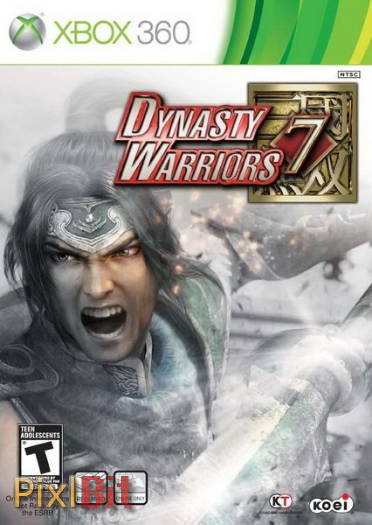
I’ll be honest; I don’t know much about the history of the Dynasty Warriors series, so I can’t provide you a comprehensive look at the differences from the last iteration of the series. From what I understand, there have been a number of improvements, including a more directed story experience with better character development, better graphics, more varied characters, and the inclusion of weapon machinery that can be utilized in battle. From a newcomer’s perspective, the additions don’t seem to make the game very interesting. Players can expect hours upon hours of grinding through underpowered enemies with little to break up the experience and keep it fresh. Having played the game side by side with Samurai Warriors: Chronicles, it’s clear that Dynasty Warriors doesn’t have the same flair as its spin-off series.
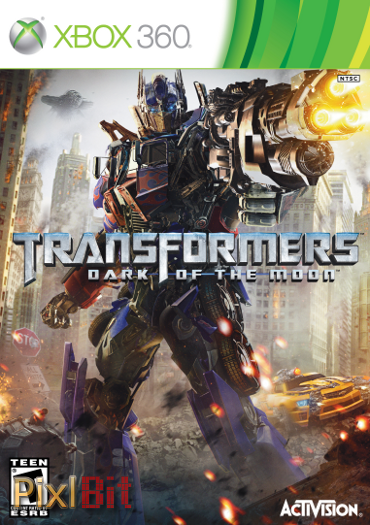
I was more than a little excited to get my hands on Transformers: Dark of the Moon. Most of that came from a deep curiosity to see how High Moon Studios tried to improve upon last year’s Transformers: War for Cybertron, a game that I felt had the needed components to make a really solid game but just failed in the execution to deliver a complete experience.

Last year, I had my first taste of the Samurai Warriors series and was pleasantly surprised by the experience. While heavy on the hack ‘n’ slashing, the game still provided for a bevy of interesting objectives and some frantic pacing as you rush about the level to meet all of the expectations. Not only were the objectives varied, but the experience was dynamic. New objectives were presented each time I went through the level, changing and morphing based on the state of the battlefield. Samurai Warriors: Chronicles falls very much in line with its predecessors, with improved graphical fidelity and a fully-voiced presentation.
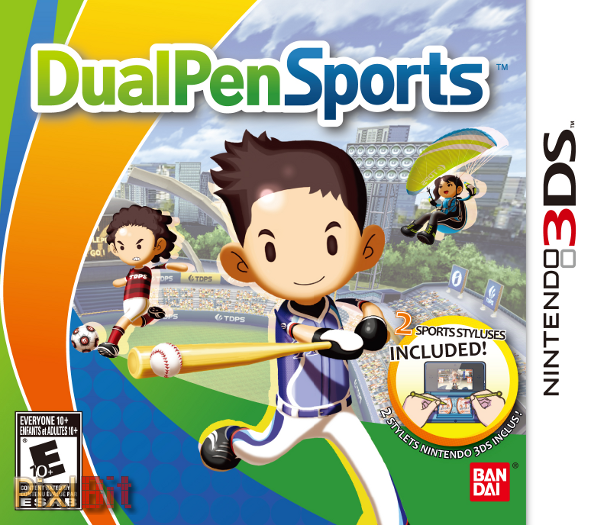
Most similar to the Wii Sports games, particularly in its implementation and polish, DualPenSports features a wholly unique control scheme that works surprisingly well. In the seven sports, Baseball, Basketball, Soccer, Skiing, Boxing, Archery, and Paragliding, all actions are broken down into simple touch screen swipes.
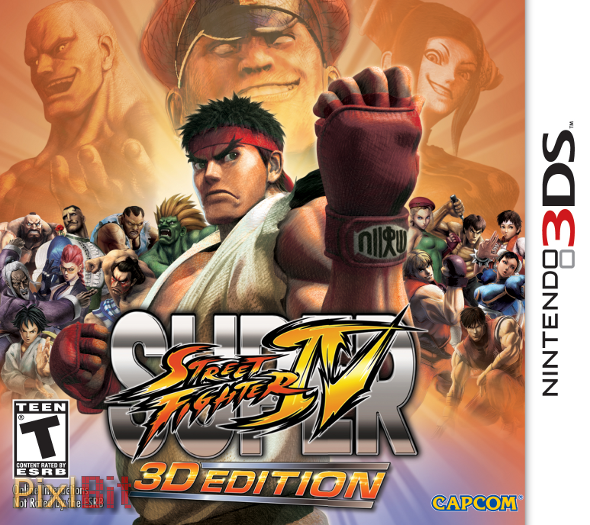
Surprisingly enough, it has already been a year since I had the opportunity to review Super Street Fighter IV when it released on the PlayStation 3 and Xbox 360. Since then, the once definitive version of the game has been topped twice, once with the game this review concerns, and the other by the Arcade Edition of the game which includes new fighters and a rebalanced roster.

In my twenty-three years of gaming, no other title has had more of an impact on me than The Legend of Zelda: Ocarina of Time. My first playthrough was a magical twenty-hour experience that I’ll never forget, and one that will forever hold a special place in my heart. But the real beauty of Ocarina of Time, is that my story isn’t unique. It defined a generation for gamers all around the world, which is why many regard it to this day as the best video game experience ever created. Now, the epic tale of a boy and his fairy returns to the gaming world, bringing with it beautifully updated graphics, vast animation improvements, a hint system, and the same whimsical charm that hooked players over a decade ago.
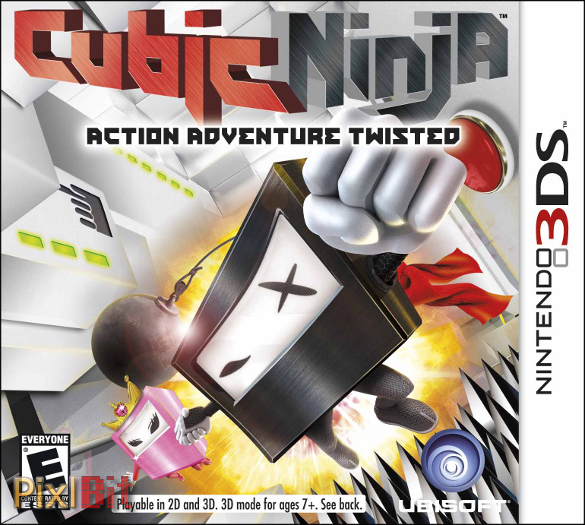
I have a predilection for quirky Japanese puzzle games, so you can only imagine how high my hopes were for Cubic Ninja. Its bold move of only allowing motion control further piqued my interest. Surely, solving puzzles with cube shaped protagonist, CC, was going to be a blast. Unfortunately, after just a few short minutes with the game, my interest was quickly dissipated due to the broken controls and poor puzzle design.