
In console gaming, there is a legend known as the Third Console Curse. Most consoles are not successful enough to receive a follow-up. If they are, then a third console is still not guaranteed. It is a hard industry not only to break into, but sustain a market share in. Yet something happens with the third console every time. It fails to meet the company's initial goals. Maybe it still sells fine, maybe the console has a wonderful library of games. Even if that is the case, the company loses market share and is in a worse spot at the end of the console's life than they were going into it. It could be arrogance from success. It could be a lack of perspective from being too used to success. Maybe it's just rotten luck. But it's consistent.
Some rules before we start: I'm only targeting consoles whose company had at least one mainstream success. Bandai and Commodore will not be mentioned for this reason (Commodore's PCs were successful, not their consoles). I will also not be including Philips because despite the CDi fitting perfectly in there, it was not designed as a game console, games were an afterthought that are only remembered because of Hotel Mario and the Zelda games. With that in mind, let's get started.
I had forgotten about the no used games, online check-ins and Kinect required for Xbox One. That's crazy. I just remember the outrage about MS trying to sell it as a multimedia device focused on watching TV and sports instead of a game machine. I ended up getting one anyway for Wolfenstein: New Order a year after release, if I remember right. So glad they reversed all that stuff though. I might not have got one. Fun article! Thanks.
Taking a longer view, in the case of Sega and Microsoft, rather than a third console curse, I actually argue that their second consoles, the Genesis and the 360, were actually one-off lucky flukes from companies that never really made a splash on the market otherwise. The SG-1000/Master System line also sold poorly in most of the world, Brazil notwithstanding. And people forget that the original Xbox actually sold on par with the Gamecube, and Microsoft lost a lot of money on the system where the Gamecube did turn a modest profit for the generation (the GBA was Nintendo's star performer of the time, of course.) Sega's and MS's fourth consoles, the Dreamcast and the Series consoles, were absolute sales disasters. The Dreamcast exhausted the last of Sega's finances, and the Series seems to be exhausting the patience of Microsoft stockholders and executives, especially after Microsoft spent the GDP of the Dakotas on buying ABK and Bethesda. Sega was also plagued by heavy corporate infighting between Sega of America and Sega of Japan, but ultimately, Sega of Japan were the bosses, and Tom Kalinske eventually left, replaced by Bernie Stolar. It's becoming increasingly clear that Xbox has been similarly dysfunctional and plagued by corporate in-fighting, if comments from outgoing Xbox developers like former Bethesda VP Pete Hines are anything to go by.
The dynamic was different for Sony and Nintendo. Their junior-year hiccups were just that, hiccups. Sony, in particular, recovered nicely with the PS4 and PS5. The Gamecube, while not a roaring success, still sold on par with the Xbox and far more thant the Dreamcast, and was modestly profitable, and did serve the function of setting Nintendo up for huge success with the WIi. The Switch was phenomenal. Both Nintendo and Sony also had successful handheld lines (the GBC, GBA, and 3DS for Nintendo, the PSP for Sony) that helped them weather the rough times, bolstered by socially-oriented franchises (Pokemon and Monster Hunter). Nintendo is also a cultural behemoth in Japan in the way that Sega simply never was - Shinzo Abe introduced the Tokyo Olympics in Brazil dressed as Mario, and when I went to Japan this year, I was greeted by huge murals of the entire Super Mario game welcoming to Japan painted on the walls of the Narita Airport terminal.
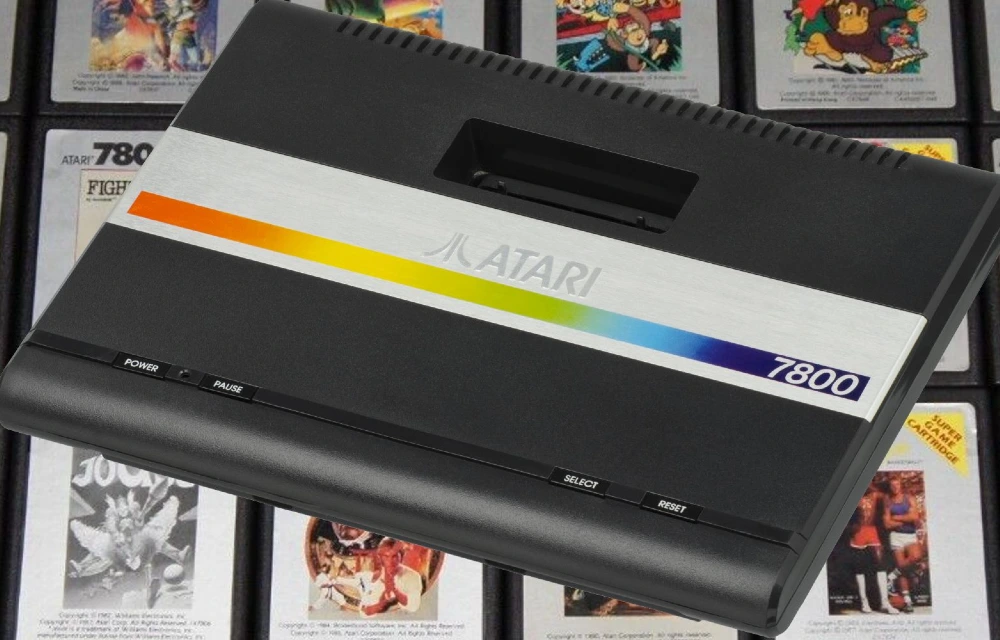
Atari was a weird beast. The 2600 was their only success as a console maker. The 5200 is actually an underappreciated console, as it had some really great games hampered by bizarre design decisions like the non-centering analogue joysticks.
The Atari 8-bit computer line showed how good the 5200 could have been if it had been informed by better hardware design choices. The 5200 was a consolized version of the A8 line, with a stripped down version of the same architecture, and many games were officially and unofficialy ported directly from the 5200 to the A8 line. The A8 line used conventional Atari joysticks, so many of the games that were a PITA to play on the 5200 were a joy to play on the A8. The A8 also had the best home version of Donkey Kong. It was one of the first attempts to unify console and home computer software. A few years later, Atari also released the XE Games System, which was also a consolized A8, though much more on par with the computer line.
Atari was plagued by a lot of infighting and corporate politics when they were owned by Warner. A lot of Atari's game designers were not happy when Atari started licensing and marketing Japanese arcade games, like Pac-Man, Dig-Dug, and Kangaroo. After the game crash, Atari was split in two, with the console company being sold to the Tramiel family, who had ironically hamstrung the A8 line with aggressive pricing on their previous flagship product, the Commodore 64. The Tramiels tried to position Atari as a PC company with the Atari ST and the XE models of the A8 line, but pivoted back to consoles when it became clear that the Wintel format and the Macintosh were going to dominate the PC market. The Lynx (which was a rebadged version of the Epyx Handy) and the Jaguar likewise failed to bring Atari back to glory.
I’d argue that Xbox and Sega for the OXB/360/Genesis were vastly different companies than the later two consoles. Seamus Blackley, Peter Moore, and J Allard had legitimately interesting ideas in the 00’s that shook up the console industry. And it’s also worth pointing out that MS’ goal wasn’t to compete with Sony, but steer the console industry in a direction where it wouldn’t replace PCs. They only continued because the XB had momentum and the 360 capitalized on that. Don Mattrick flushed that all down the toilet to the point where MS didn’t have the infrastructure to support a console, they needed to rebuild almost from scratch. With that in mind, the Series feels like a stronger attempt to catch up, just one that won’t be disrupted by COVID and AI. Granted, MS butchering the studios they bought makes me not want to be a part of that, but Activision still made truck loads of cash when they were the studio I hated that released Call of Duty.
As for Sega, I’d argue Michael Katz was the real catalyst for the Genesis’ success. The emphasis on sports games and celebrity names alongside its aggressive in your face marketing worked, which Tom Kalinske continued alongside his give the razor/sell the blades approach. What Kalinske did not have was an eye for talent or quality games, which was fine when the Genesis rode on the consistency of iterative sports games and their Japanese games, but come the time of the Saturn and they had a console that only appealed to Japanese gamers. The Sega of America games were not up to par with the competition and they really lacked quality sports games you could find easier on the PS1. Add in Stolar’s terrible marketing and refusal to localize strong Japanese games and it was a disaster. The Dreamcast would have been a fine console if Sega’s reputation and finances weren’t in the toilet. I could call it cursed, but they still made many right moves before its death.
To anybody who has seen how Microsoft has worked in the past, the collapse of the Xbox and the terrible damage done to so many studios was an entirely predictable outcome, and sadly an inevitable one.. We've seen it time and again. Microsoft is a veritable graveyard for its acquisitions. I'm honestly glad Nintendo laughed them all the way out of Japan in 2001, when they tried to buy their way into the industry by way of buying Nintendo.
The Saturn didn't simply decline compared to the Genesis, it crashed. Hard. N64, which represented a 33% decline from the SNES, was at least profitable, though Nintendo was not happy about being outsold 3:1 by Sony, and investors would have been displeased by that decline if Nintendo didn't have another successful product line to shore up earnings statements. Pokemon money and increased GBC sales took some of that sting away. Sadly for Sega, Sakura Taisen-themed coffee shops and Virtua Fighter 3 in Sega Game Centers didn't have the same cushioning effect.
Oh, and to the question "What is your favorite non-Nintendo N64 game," that's easy. It's Mystical Ninja Starring Goemon, where Konami made the N64's sound hardware literally sing in a game that did 3-D Zelda before Ocarina of Time did it. Really, Konami's N64 games were all interesting. Even if they weren't entirely successful, I appreciate Castlevania 64 and Legacy of Darkness for what they did to try to advance Castlevania to the 3D era.