
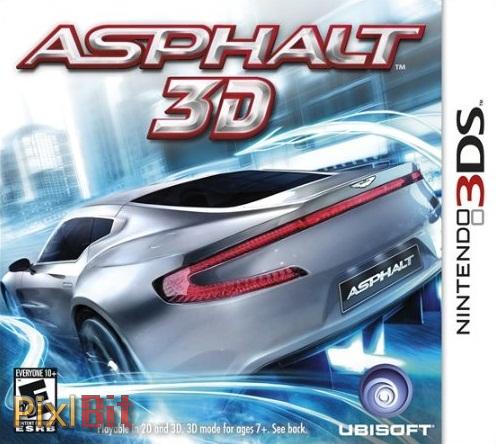
While I often don’t think the term “mixed bag” says much about a game, I think it speaks to the core of Asphalt 3D quite well. There’s a very even mix of good and bad, offering players what could’ve been a solid racing experience if it weren’t dragged down by some poor AI, technical issues, and cell phone game design. Players will find some solid racing mechanics underneath all the mess, fun tracks complete with shortcuts, as well as an assortment of challenges providing some necessary variety.
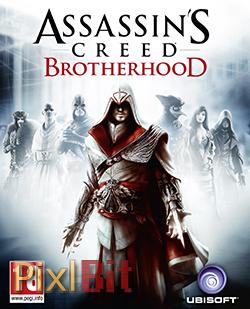
Brotherhood chronicles the continued adventures of Italian renaissance assassin Ezio Auditore da Firenze and his battle against the Knights Templar over the future of the human race. As a fan of the series I was a tad disappointed that we wouldn’t be moving on to a new time period, but thankfully my doubts were demolished as Ubisoft delivered a fresh experience, continuing to refine its formula in impressive ways.
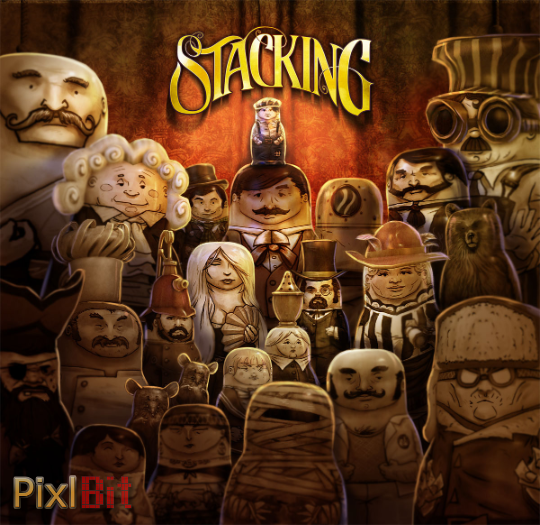
Marking their second downloadable title for Xbox Live Arcade and PlayStation Network, Double Fine’s Stacking provides a one-of-kind, full-fledged experience. Similar in some ways to Take Two’s Space Station Silicon Valley on the N64, players take on the quest of a Matroyshka doll that can stack into other dolls of increasing size. Through this unique mechanic, players can explore the landscape, solve puzzles in a variety of ways, and complete a menagerie of other tasks. This unique gameplay makes for one of the best titles in Double Fine’s catalog and a solid purchase for anyone looking for something unique.
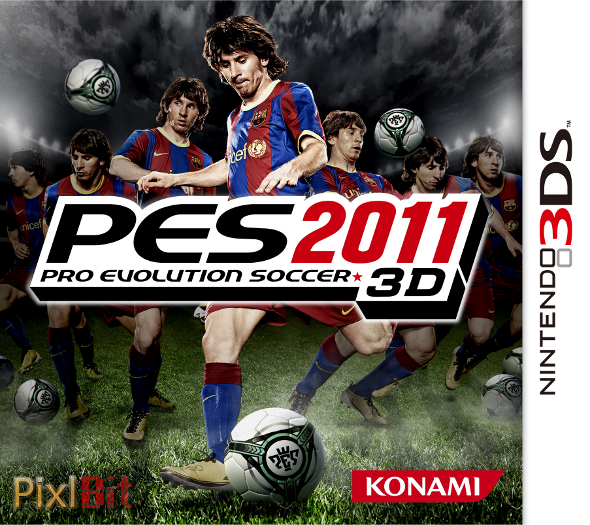
Pro Evolution Soccer 2011 3D is an adaptation of the PSP version, itself a continuation of the last generation PlayStation 2 PES games. From what I gather, the PES games on the PlayStation 2 are some of the favorites of the soccer sim community, thus making this 3DS adaptation a continuation of the better games of the series… with 3D. I’m not fully versed with said games, but I can say that PES 2011 3D provides an extremely deep soccer simulation that clearly caters to hardcore fans of the sport. This isn’t entirely appealing to me, due in part to the aggressive, nearly insurmountable AI (for a beginner) and my general disinterest in the sport. However, the game is occasionally enjoyable and with some of the best stereoscopic 3D of the launch 3DS titles, it does a great job of validating how great the 3D effect actually is.
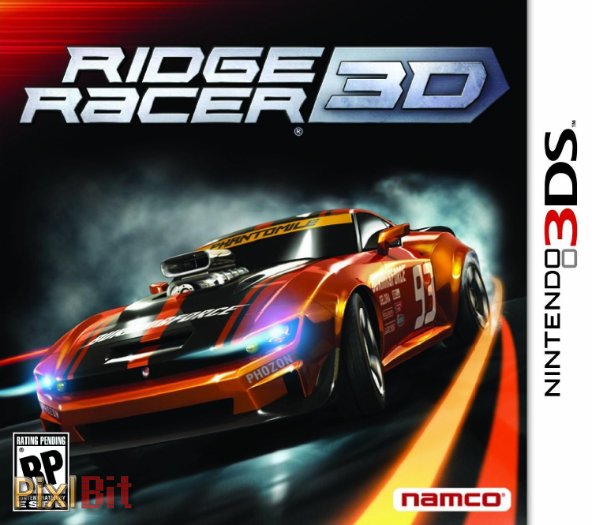
It has been a while since I’ve played a Ridge Racer game, but after a good amount of time in Ridge Racer 3D, it’s clear that things really haven’t changed at all. Don’t get me wrong, this isn’t a bad thing – the Ridge Racer flavor of racing is a fairly enjoyable one, but it does seem like after many years and iterations, something would be different. As it stands, with the launch of the 3DS, players have access to a solid racing title that doesn’t offer too much outside of standard three lap racing.
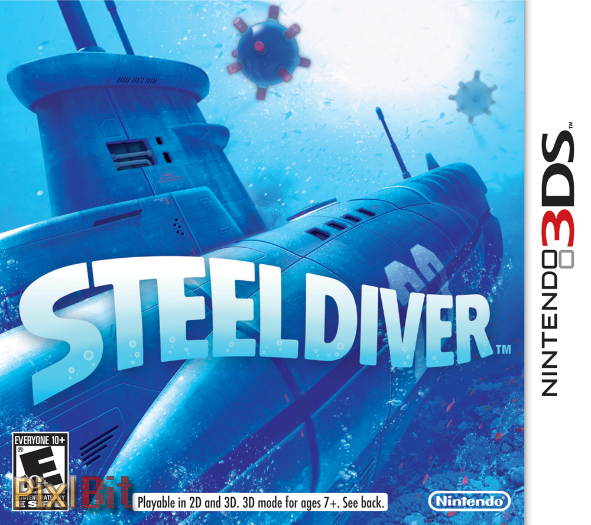
There's no question, Steel Diver is a weird game. Even after playing it for a while, I'm still not totally sure how to feel about it. Clearly, it's not the deepest of games and it's definitely not one of the better launch titles available, especially from Nintendo. Furthermore, its 2D gameplay does a better job showcasing the touch screen than it does the 3D effect; which isn't totally surprising considering the game started as a DS tech demo. The gimmicky Periscope mode handles that just fine, but like the main content, it's not going to be compelling for the majority of players.

SEGA's first 3DS offering is really Super Monkey Ball (puzzle mode), Super Monkey Kart, and Super Monkey Fight in one package. Three different game modes with all completely new, unique content seems like a great idea on the surface. Does the concept pan out? The answer is a resounding, “Eh, it works a little bit.” While the main Monkey Ball game is there, along with 80 traditional stages, there are a few issues with stage design and my experiences in Monkey Fight were entirely forgettable. Monkey Kart shocked me as it is a full-on kart racer – but lacks enough content for a standalone purchase.
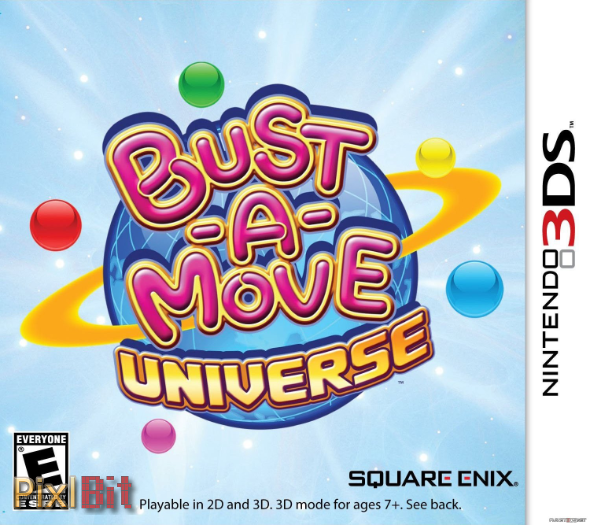
Although the Bust-A-Move series has been around for seventeen years, I had never played a single game until yesterday, with the release of Bust-A-Move Universe. After spending some quality time with the game I walked away extremely underwhelmed, and was left sorely missing a game I had wasted plenty of time with back in the day when I should’ve been studying: Snood.
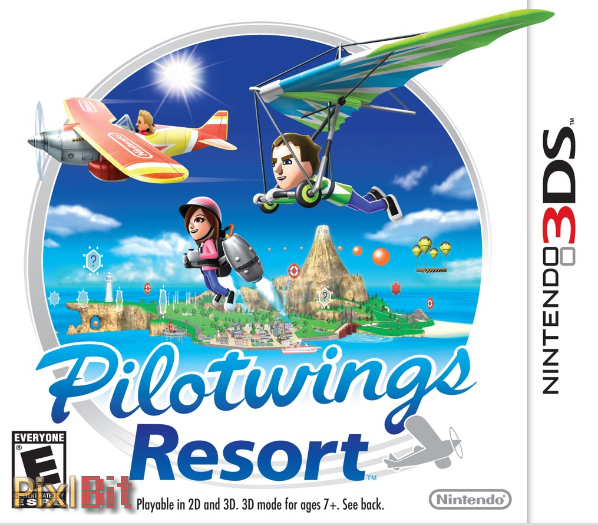
It has been fifteen years since the Pilotwings series has seen a release. Surprisingly, even after fifteen years, Nintendo and Monster Games have done an amazing job of capturing the essence of the series. With a wide array of challenges, six unique vehicle types, and gameplay that begs for replay, Pilotwings Resort unquestionably hits the mark. Don’t let the Miis convince you otherwise – Pilotwings Resort is a challenging game, requiring precise control and perfection for the highest of scores.
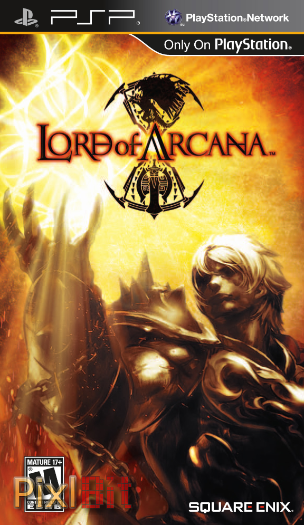
I've stated it before, and I'll say it again: I'm not a fan of the Monster Hunter series and its archaic design. The latest from Square Enix, Lord of Arcana, seems to set out to replicate the design of Capcom's popular series, but clearly fails in its execution. While I didn't think it could be possible, someone has managed to make a bad design worse.
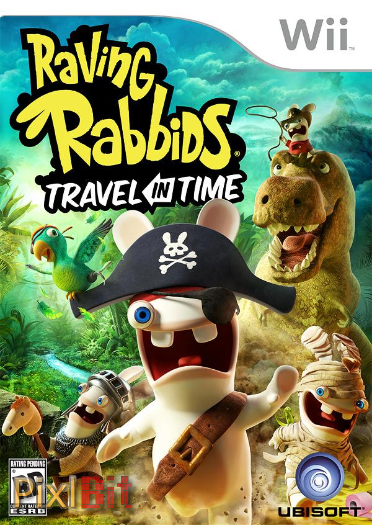
Yes, another Rabbids game. No, it's not the kind that was actually a bit of fun, it's the other kind, the mini-game cash-in kind. I think we can all agree that enough of these have released already this generation, but Ubisoft refuses to let up in their production. Even more disappointing than reverting the series to its roots, is that the premise (Rabbids travelling through time) would have made for a great follow-up to the more adventure-oriented gameplay of Rabbids Go Home. Instead, players are left with a collection of mediocre mini-games that don't even make an attempt to truly utilize the time concept, relegating it to the background of the mini-games, making its inclusion negligible.
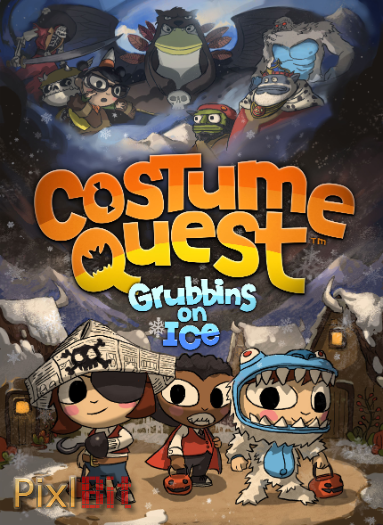
Costume Quest was a pretty fantastic game – it mixed RPG elements with exploration, and managed to make a game out of dressing up and trick-or-treating. It's a neat idea in concept and seeing it come alive on screen was equally fantastic. The Grubbins on Ice DLC is a continuation of the Costume Quest story and gameplay, which by definition makes it passable, but ultimately it feels like a cheap cash-in that should've been included in the main game in the first place.
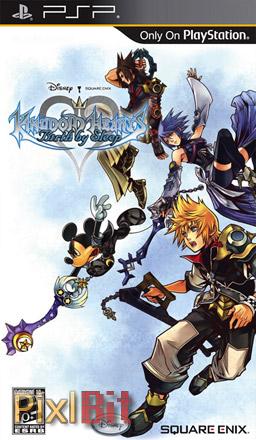
I don't get it. I've tried–honestly, I've tried. But no matter how hard, I just don't get the Kingdom Hearts obsession. Until Kingdom Hearts Birth by Sleep, I had never truly played a Kingdom Hearts game before, though I have been lightly exposed to the series in the past. After investing many hours into Birth by Sleep over the past few months, I just can't grasp what makes the series so unbelievably popular. I can only imagine the Disney fan service is what does it for most, because the one-trick pony gameplay definitely is not it. Maybe it's the pointy-haired, emo protagonists.No one can be certain. Whatever the case, I can confidently say that it isn't for me and no amount of time spent with the game is going to sway me otherwise.
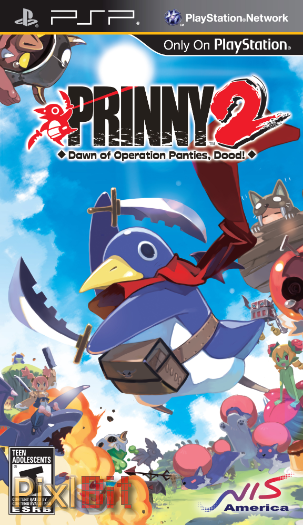
Ever play a sequel to a game where there is almost no discernable difference from the original? That's Prinny 2: Dawn of Operation Panties, Dood! in a nutshell. After playing the original title, there's really no compelling reason to come back for seconds in Prinny 2, because there have been almost no upgrades or enhancements to the original formula to make it a better game. What's up with that NIS? This isn't a movie, it's a game; they are supposed to get better from one iteration to the next.
Most gamers out there have a much larger appreciation for the Bit.Trip series than I do. Something about the constant repetition and unbending difficulty has very little appeal to me at this point in my life, and I just don't care to sit and do a simple singular task over and over again in order to complete the goals at hand. That being said, Bit.Trip Flux stands out for me because, while hard, offers many checkpoints in a level and unlimited continues. I know I'll never be the guy to max out what the game has to offer by scoring ridiculously high in a given level, so I'm sure some of the magic of Flux is lost on me. Regardless, the game seems to be a fitting end to this unique series, and a great return to the game that started it all, Bit.Trip Beat.
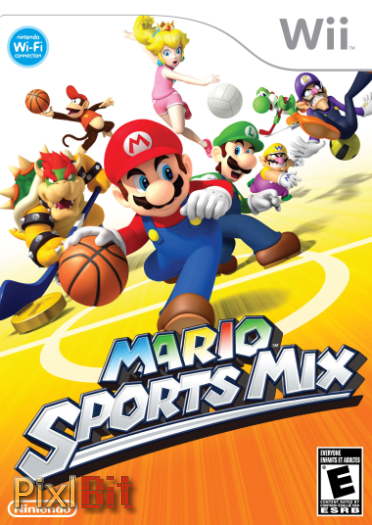
No matter your preference for sports games, I think it’s safe to say that the Mario Sports line has some universal appeal that just about anyone can love. Starting with Mario Tennis, straight up to Mario Baseball, each and every game has been well-polished, deep, and immensely enjoyable for long periods of time. Mario Sports Mix, the latest in the Mario Sports line, does not live up to this pedigree in the least. Much more akin to mini-games from the Mario Party series, Mario Sports Mix stuffs four half-baked sports games into one.

It feels like Uncharted 2 all over again. Sony sends me a game from a series that I'm completely unfamiliar with, and I'm completely blown away by its quality and construction. Uncharted 2 was easily my game of the year in 2009, and even though it's early in 2011, Killzone 3 makes a strong argument for itself. While I'm not the world's biggest first person shooter fan, there's something about the mechanics and general feeling of Killzone 3 that makes it very tangible, which goes a long way in creating an immersive experience.
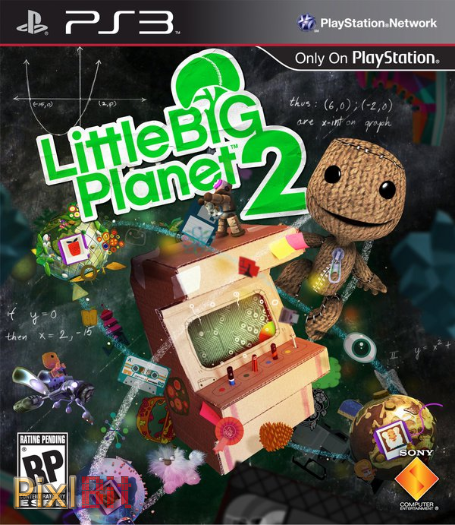
I have to hand it to MediaMolecule, developers of LittleBigPlanet 2. They've created something truly amazing – a game that makes games is a pretty wild idea, and when you see what some people have made, it's only that much more impressive. Here's the thing though: while LittleBigPlanet 2 makes for an impressive specimen, it doesn't make for all that great of a game. The majority of the main levels are uninteresting and anything community produced, while potentially impressive, is just a one-time affair.
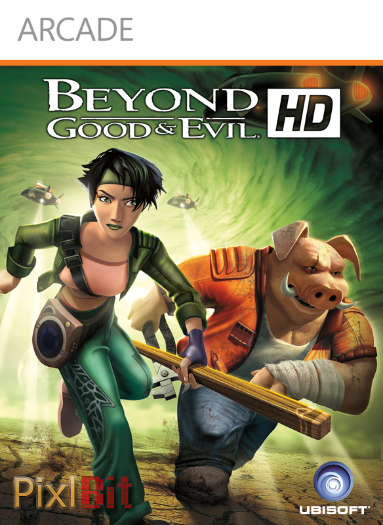
If you missed Beyond Good & Evil last generation, shame on you. The game offered a unique blend of genres and a fantastic story with emotive characters, which created one of the most immersive experiences of the generation. The good news is that Ubisoft has remastered the game in 1080p HD and made it available for digital download via the Xbox Live Arcade, with a PlayStation Network version on the way. Whether you owned it before or never had a chance to experience it, at its extremely low price of $10 there’s no excuse for missing this remastered version.
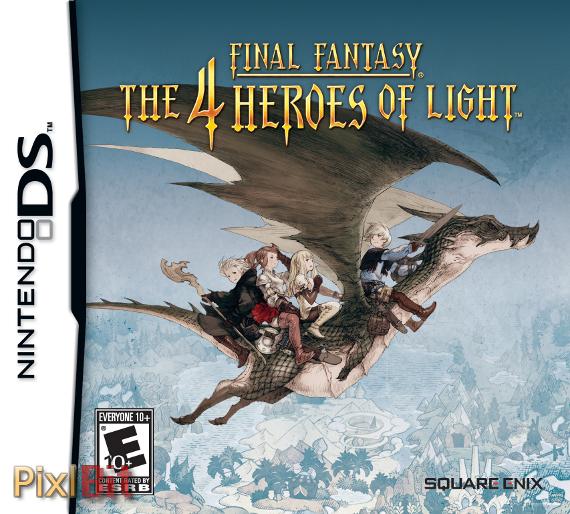
Final Fantasy is one of gaming's longest-running and most prestigious series. It started humbly as the expected swan song for sinking Japanese game developer Square Soft, but its surprising success has made the series and its developer a forerunner in the gaming world. These days Final Fantasy seems to be caught up in its own limelight. The 4 Heroes of Light takes the now bloated and flashy cut scenes and increasingly complex gameplay formula and shakes it back down to its core. What stands in its place is a celebration of the series' roots.
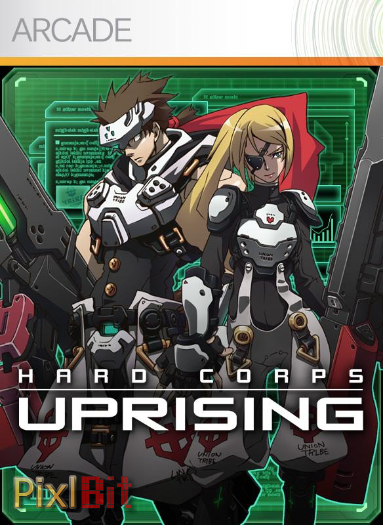
Let’s get this out of the way: Hard Corps: Uprising by Arc System Works is hard -- unapologetically hard. All I could think every time I died was that they should have called it Impossible Corps, which made me think of that awful “This is not mission difficult” quote from Mission Impossible II which only made me angrier. To keep the story short, Arc owes me a new controller. Anyways...
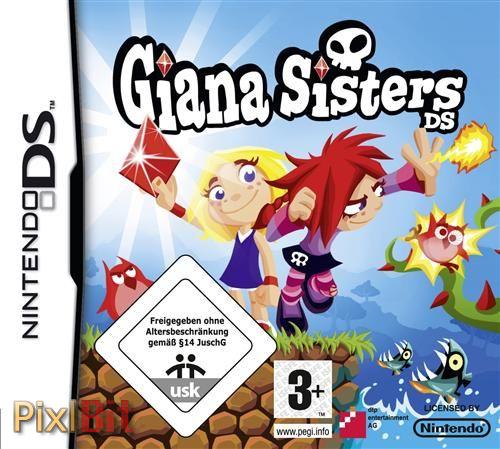
Rather than tell you some elaborate story of what The Great Giana Sisters is and how it came into existence (feel free to read up on that on Wikipedia), I’ll tell you all you need to know. The Great Giana Sisters is a Super Mario Bros. clone released originally in 1987. Since then, a new version of the game has been created for the Nintendo DS, which features new levels, items, and goals. While I can’t tell you much about what has been borrowed from the original release, as I’ve never played it, I can tell you that this latest release is enjoyable.
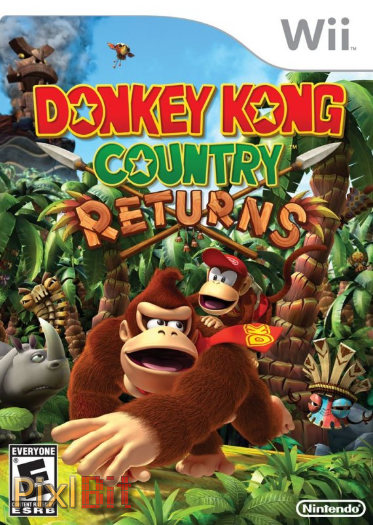
Donkey Kong Country Returns is the most self-explanatory title since New Super Mario Brothers. It's literally a return to the vine-swinging, barrel-blasting, death pit hoppin', baddie stomping, 2D platforming of the original Donkey Kong Country. It's half remake, half remix, and a whole lotta fun. Old-school never gets old... but it can get a little messy.

Sometimes a simple gameplay mechanic can pigeonhole an entire game. Take Tales from Space: About a Blob, for example. Within 30 seconds of the first level, comparisons started pooling in the back of my mind like little gelatinous blobs of reasoning. Is it Katamari Damacy? I mean, you roll around collecting stuff with the goal of making yourself big enough to collect even larger items, so that assumption should be safe, right? But the fact is, About a Blob doesn't just pull its inspiration from one game - it pulls from a lot of them. From Little Big Planet to the old NES version of Strider and every good to decent platformer in between - About a Blob pays homage to its roots.
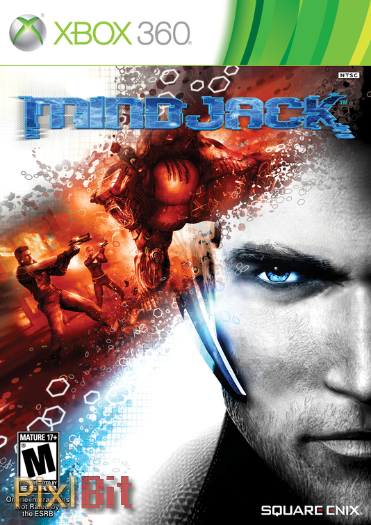
I was very intrigued when I first read about Mindjack and jumped at a chance to review it. A sci-fi third person shooter where your main character has the ability to “hack” into anything that has a mind or computer, as well as the ability to jump into anybody else’s game seamlessly and either help or hinder them sounded like something that could be an amazing experience if executed correctly. It’s those ifs that always get you, though. Mindjack, while having a unique and intriguing premise, fails completely in its execution.