
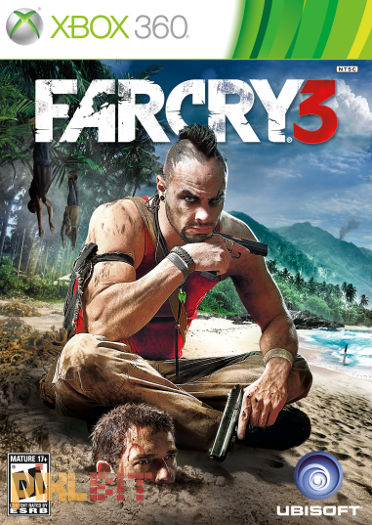
I never expected to become so enamored with a game where you inhabit the body of the hugest douche bag to ever visit the South Pacific, but it happened. After suffering through a fairly irritating opening sequence, you eventually find that you are free to explore the Rook Islands at whatever pace you desire. In some of my early self-paced explorations, I decided to stealthily capture an enemy outpost. Hiding in the bushes and taking stock of what foes lay within the compound, I heard the loud roar of a tiger that charged into the outpost and slaughtered everyone inside while my knife and gun remained completely unused. I conquered that outpost by letting the game’s systems collide and work in my favor. These types of situations happen continuously in Far Cry 3 and whether they were to my benefit or demise, it’s always a blast to witness. It’s these interacting systems that make Far Cry 3 a special experience that is worth playing, despite the grating narrative.
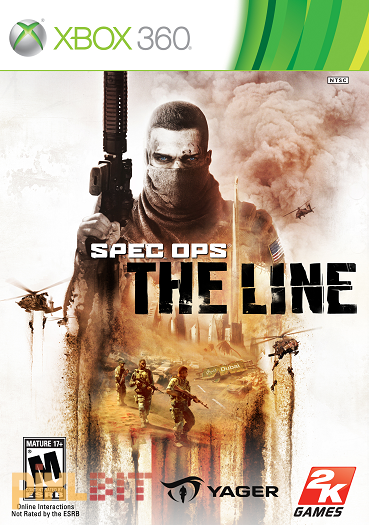
When the creative minds of game designers come up against the practical, business-focused minds of game publishers it can lead to endless frustration. This frustration is shared by the consumers, wanting a unique gaming experience but also needing that experience to be something that they can instantly click with. This frustration is the crux of my feelings for Spec Ops: The Line, a game that pushes narrative into some refreshingly interesting places, but stumbles with game mechanics that smack of publisher homogenization.
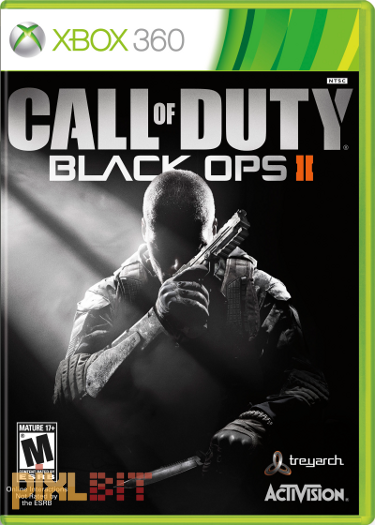
With Call of Duty coming out every November like clockwork and a slew of shooters jumping on that “modern warfare” bandwagon it can be easy to succumb to shooter fatigue. That doesn’t mean I can borrow a page from classic gaming history and turn in a review that reads “just another shooting game” though; each Call of Duty game brings something to the table that’s worth talking about. Call of Duty: Black Ops 2 moves the franchise forward in some ambitious ways, but it’s held back by the very structure the series is known for.
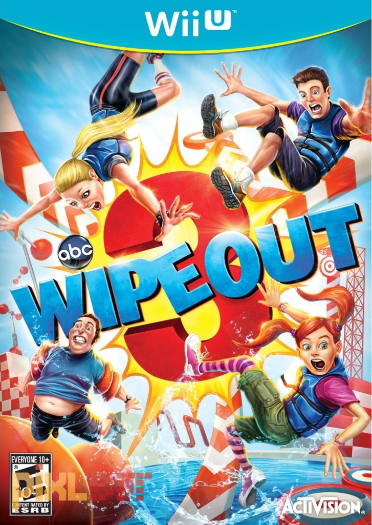
I’m aware that this is going to sound insane, but I was actually excited to give Wipeout 3 a whirl, despite being a licensed game for one of the more ridiculous shows on television. Inherently the show’s content lends itself to interesting 3D obstacle-based platforming, but more importantly, developer Behavior Interactive is responsible for Doritos Crash Course, which on the surface bears many similarities. Though free and sponsored by Doritos, the game took some serious cues from Donkey Kong Country and made for one of the more interesting platforming experiences to be released in a long while. Unfortunately, Wipeout 3 doesn’t channel that energy and instead provides an occasionally sloppy, mostly boring, licensed game.
Man, I really love Warlords. It’s hard to believe how great of a game it is, with its simple rules, spot-on controls, and its capability to create some of the most memorable multiplayer experiences around. Now, don’t get confused. I’m speaking about Warlords, which can be played on your Atari 2600 (or possibly in your local arcade), and definitely not some other game that is now available on PSN and XBLA. That game, Definitely Not Warlords (DNW), is an affront to the basic beauty of game design and does not deserve to carry the Warlords name.
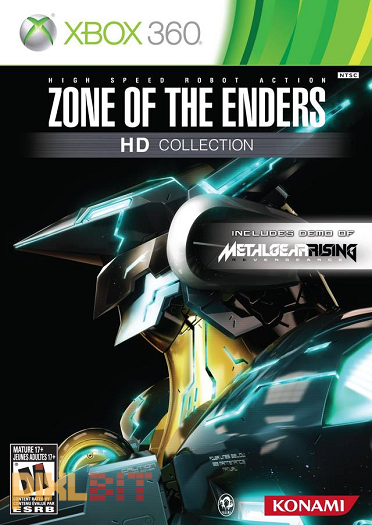
While Kojima Productions is best known for its work on the Metal Gear series, last generation they were able to sneak out a couple of other titles that took place in a war torn world dominated by mechs, known as Orbital Frames. Zone of the Enders HD Collection brings both of the PlayStation 2 titles in the series onto one disc for both the Xbox 360 and PlayStation 3. While these games look much better and remain entertaining, they suffer from intermittent frame rate issues, as well as an overall slower pace that diehard fans will immediately notice.

As a fan of the television series Transformers Prime, I have to admit that part of me enjoyed parts of this game that is clearly aimed for a much younger audience. Earlier this year, I got my Transformers fix with High Moon’s Fall of Cybertron, but I felt that Prime had an opportunity to do justice to a different part of Transformers lore. The universes are both part of Hasbro’s initiative to create continuity within the cannon and not only that, but a dark and grittier tone is also shared by both. After playing Transformers: Prime however, I was left disappointed.
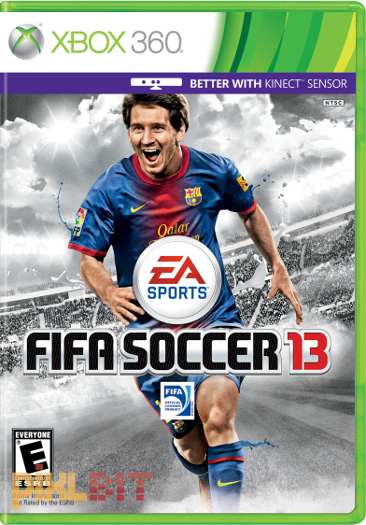
FIFA 13 for the Wii U isn’t really FIFA 13. Sure, there’s a big “13” emblazoned right there on the box, and the rosters are all updated from last year, but those changes don’t really make it a new game. The FIFA 13 that gamers have been enjoying on PlayStation 3 and Xbox 360 is decidedly different from the game that has shown up on the Wii U; a game that is seemingly behind the times. At its very core, this is FIFA 12 – a good game to be sure - but a step behind the other versions that have been out for months.
Roughly one year ago, German developer Shin’en released the latest entry in the “Nano” series and what turned out to be the first in the Nano Assault series. Nano Assault Neo recycles some of the content from that release, but removes the Star Fox-like levels and shifts all of the focus to the pure twin-stick shooting levels. This new focus proves to be a big success, but the shortened selection of levels (16, down from 32) leaves something to be desired.
I doubt you could find a single person who'd think that burning things in a fireplace would make for an entertaining game. But the masterminds at Tomorrow Corporation knew better than us all. Taking inspiration from the Yule Log Channel that attracts viewers yearly on television, Little Inferno provides a singular view of a fireplace and on top of it builds one of the most addicting, smooth flowing, and charming games of the year.
Painkiller is aggressive. Hordes of demonic forces stream forth from every conceivable point of entry, threatening to overwhelm with sheer numbers. Death metal pumps through the speakers, fueling the adrenaline-soaked battles. I cycle through my selection of wicked-looking weapons, choosing the right tool for the task at hand—blowing big holes into my enemies. I have to move around the battlefield quickly, lest I get pushed into a corner and annihilated. Painkiller is all about turning the dial to 11, and it does so with glee. I was bored by level 2.
By the end of Episode 3 of Telltale’s “The Walking Dead”, I felt like I had been taken on an emotional rollercoaster. Many events happened that changed the scope of the situation for Lee, Clementine and the rest of the group, and I knew going into Episode 4 that it would continue down that path. Knowing also that Episode 4 is the lead up to their Episode 5 finale I hoped that the stakes would be raised in order to provide for a satisfying final chapter. Thankfully, I was not disappointed.
A full-scale handheld Assassin’s Creed game has been a long time coming. However, the hardware and storage space issues have always been a limitation for Ubisoft to bring such an ambitious game to the space. Thanks to the PlayStation Vita, Ubisoft Sofia was given the green light to move forward, netting Assassin’s Creed III: Liberation. Unfortunately, despite the hardware’s capability, it’s clear this adventure is scaled back in every way imaginable and rife with many of the bugs found in its mainline console brethren.
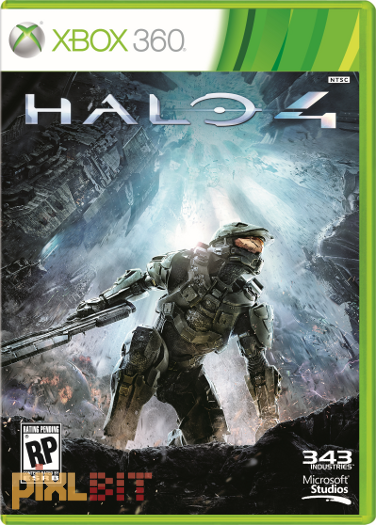
Confession time: I’m a Halo noob, having only completed Halo 3 and played the first two games for a few hours each prior to this review. But that’s okay, because it’s a brand new day in the Halo universe, right? We have the first chapter in an all-new trilogy featuring everyone’s favorite Master Chief, and it’s also the first mainline game by 343 Industries (taking the reins from Halo creators Bungie). This should be the perfect jumping-on point for new players, while giving stalwart fans more of the game they love. That’s the dream, anyway. The reality is a bit different.
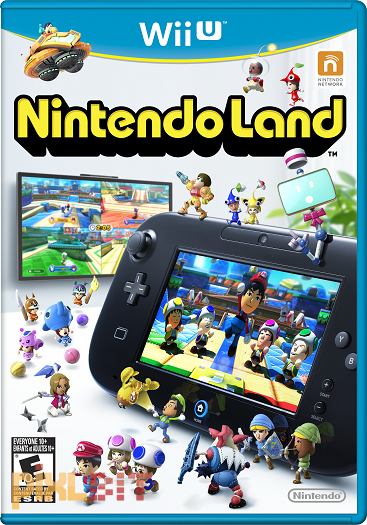
Upon picking up my Wii U, getting Nintendo Land was something of an inevitability. I can’t say I was particularly excited for it, but I knew it was coming part and parcel with my Deluxe system. Surely New Super Mario Bros. U was going to get the bulk of my attention because, well, it’s Mario. But on a whim, I decided to break the system out of its box and try this flagship title first. While I can’t ask New Super Mario Bros. U how it feels (being a game and all), I can only assume it’s pretty upset as it has spent most of its life in its box thus far. Yes, Nintendo Land is that good.

In many ways the Wii U represents the culmination of Nintendo’s work across the past few generations of handheld and home consoles. The concept of asymmetric gameplay was born on the GameCube with its Gameboy Advance connectivity; a multitude of control options, including motion controls and pointing was birthed with the Wii; touch-enabled, dual screen gameplay hit critical mass with the introduction of the DS; and even the system’s menu draws influence from the recently released 3DS. What’s most impressive about the Wii U is the manner in which it manages to blend all of these concepts into a functional and cohesive experience that gives players an unbelievable degree of control within their gaming environment.

I thought we had moved past the era of silly touch-screen controls early in the lifespan of the DS, but apparently it still has its proponents. Grasshopper Manufacture and Level 5 have teamed up to make sure that the dying art of crappy stylus futzing stays around a little longer with their joint downloadable venture, Liberation Maiden. Maybe the controls themselves wouldn’t be so objectionable if there was some other entertainment value in the package, but as it is, Liberation Maiden is just a boring series of stylus rubbings in an anime wrapper.
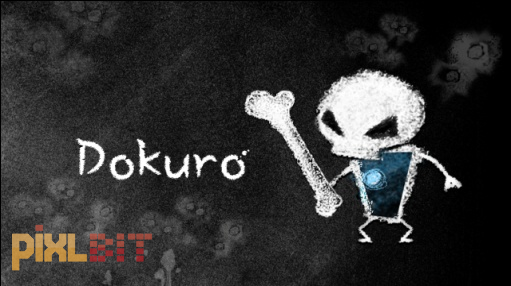
I've been putting off writing this review for at least the past week because I was having a hard time contextualizing my feelings for Dokuro. In short, the game wasn't gripping me, but I couldn't put my finger on exactly what it was that turned me off. Was it the progression? Couldn't be - it offered a consistently growing repertoire of abilities. It wasn't the aesthetic; that held plenty of appeal, as did the characters contained therein. All along I thought to myself that it must be the challenge. But with a mix of easy and harder puzzles, how could that be the problem? Well, after some further reflection, there's no question that the challenge level of the game is the cause of my apathy. Let me explain.
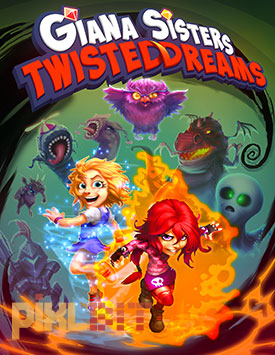
Somewhere during the creation of a game, there seems to be a point where the design team must ask itself, “Should we make our game longer?” Sometimes this might result in the addition of compelling new content, but so often it results in revisiting the same places you’ve already been to collect more thingamabobs. This very decision is what ruins Giana Sisters: Twisted Dreams. Your forward progress in what could be a wonderful game is stymied until you can perfect your collection of MacGuffins without dying in levels you’ve already completed. It’s a real shame too, because without this unnecessary padding I wouldn’t have noticed the game’s glitches or gotten as frustrated with its inconsistent responses. Most importantly, I wouldn’t have gotten so sick of playing it.

Aside from ambitious, the only other word that can be used to describe Orgarhythm is disappointing. Given that Tak Hirai of Space Channel 5, Shenmue, and Meteos fame was behind the unique blend of action, strategy, and rhythm gameplay, I couldn’t help but be excited. However, the execution of these concepts simply doesn’t match up to the ambition of the idea.
This Sunday only, it's the cavalcade of carnage, the duke of demolition, the agonizing abolition of Destruction Derby 64! Twelve cars enter, only one emerges as champion! Witness the spectacular sights of vicious vehicular-crushing action, hear the grind of wreckage under wheels, smell the molten metal masses that remain! It's an all-out, anything goes, bone-shattering, nail-biting, no-holds-barred, punch-you-in-the-gut, edge-of-your-seat rock 'em sock 'em good time! Sunday, Sunday, Sunday!
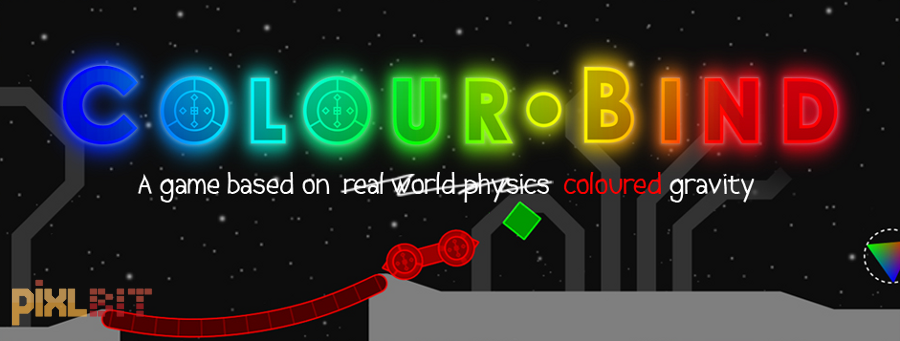
I have a saying I use when describing a popular cell phone game that just about everybody I know, gamer or not, has played: Insanity is doing the same thing over and over again expecting different results. It's also Angry Birds. When Colour Bind is at its best, it's a fun, physics-intensive puzzle game that's delivers a satisfying experience. When it's at its worst, it's a lot like Angry Birds.
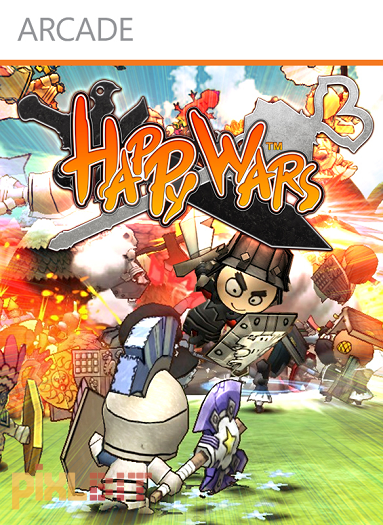
One of the things to come out of the last 6 years or so that I’ve found most interesting has been the rise of the free to play model. It wasn’t too long ago that free to play was synonymous with amateur game design and simple flash games. Now, even the biggest companies in the world are creating games that don’t ask for money up front, and the quality of those games has increased many times over. Console manufacturers have been slow to adopt this business model, so I was very interested in playing Happy Wars for XBLA, the first free to play game for the 360. While I don’t think that Happy Wars is a great example of the free to play structure, it stands as a unique and fun experience for Xbox Live Gold subscribers.
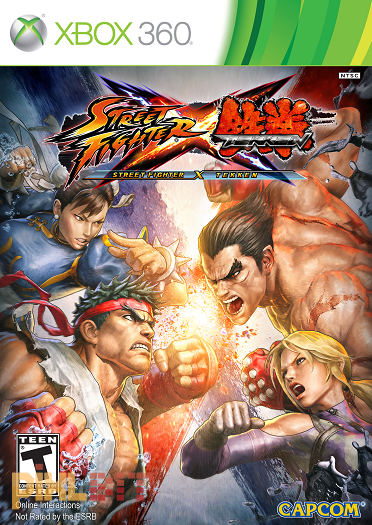
As usual, resident PixlBit fighting game expert, Jon “JD” Lewis, has done an excellent job reviewing Street Fighter X Tekken when it released some months ago on the Xbox 360 and PlayStation 3. After a short delay, the game has finally made its way to the PlayStation Vita, where I finally had an opportunity to check it out. Sadly, much of what JD complained about back then still persists today, especially the oft-laggy online mode and the slightly misguided gem system.
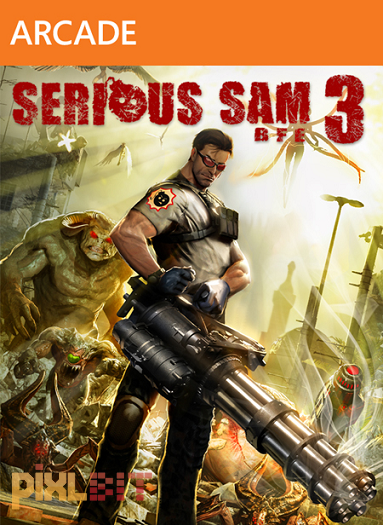
In 2001, the original Serious Sam was already late to the first-person shooter party id Software started, but its gameplay was still familiar because id's classics such as Wolfenstein 3D, Doom, and Quake were still fresh memories. In 2012, Serious Sam 3: BFE is a complete anomaly, following neither the artsy nor military styles which now pervade the genre.